Business planning often gets a bad press. Yet those who do sit down and plan their business are so much more focused, confident, and successful than those who float along with the economic tide. Successful leaders plan their business, so they can focus on leading their team to deliver their plan.
Over the past ten years as a strategic planner we’ve worked with hundreds of business owners and seen how those that create a plan and implement it. Those that plan their business do so much better than those owners who try aimlessly lead their business on a wing, a prayer or a dream. Successful leader’s plan their business, so that everyone knows where they are going what their role is in achieving that success.
According the latest BERR report, Small and Medium-sized Enterprises (SME’s) together accounted for 99.9 per cent of all enterprises, 59.8 per cent of private sector employment and 49.0 per cent of private sector turnover. SME’s really do matter to the British economy, and yet they receive little effective support from Government agencies despite being the backbone of the economy, employment, and innovation.
Why Business Leader’s Don’t Plan
“If you don’t make things happen, things will happen to you”Lanes Company
Having questioned business owners over the last decade the reasons why owners have not put a plan in place and then executed it, the excuses range from not having the skills, make the time, or have the conviction of their thoughts. Owners know they should have a plan ‘we had one when we first started, but have not looked at it since’ is a common theme. The other is being too busy fire fighting to realise that preventing fires starting, is the best way to not have to fight them.
Do business owners not see the value in developing a plan for their business? On the other hand, is the classic perception for business owners that frenetically staying alive is seen as being successful? For many not knowing how to plan is one major reason why people haven’t and don’t plan their business. Where to start, and how to know what they are trying to achieve immediately puts people of planning.
Faults in Business Planning
Business planning is also often at fault here. The most common reason new start up businesses create a business plan is to secure funding from banks, that’s when banks did fund business start-ups (now they just offer a high interest mortgage backed by the Government). Therefore, once people have received funding they no longer see the main advantages of planning (and the real advantages are not around money).
Business Planning Skills – Have some GOALS
“The discipline of writing something down is the first step toward making it happen.” – Lee Iacocca
Planning takes time, resources, (grey stuff) not the executive trip to some exotic away weekend planning, but some time allocated to review where you are as a business, how your sector and industry are performing and what you want to achieve in the future. Whether it is looking at the next year or planning the next five years, everyone who owns or directs a business is responsible for setting its direction. However, just having a plan in your head, with the classic defence of ‘its flexible at the moment’ is either ducking the responsibility or deluding themselves.
The only way to have a plan rather than a dream is to have it written down, turned (if it is not already) into an action plan which is resourced and owned by someone to deliver. Only then do businesses go forward in a deliberate purposeful way. Only then do the right things happen because you made them happen and only then can everyone, employees, shareholders, customers, channel partners and even other halves, see your dream, share your dream, deliver your dream. That’s when planning works. It is a written document, which lives within your company, and it doesn’t matter if you are a one-man (woman) band or running a multi-national Plc.
What Business Planning Delivers
A clear business plan is the result of a process. It starts with thinking, then writing it down. That commitment itself is a sense-check, it creates a reality and makes the writer accountable for their thoughts. By writing down your business plan a leader takes a dream and begins to make it a reality. Others can see, critically evaluate, and judge the business idea and review the opportunity the plan intends to address. By doing this a business idea is viewed in the round, looking not only at the idea, but the actuality of what needs ot happen across all busienss area functions to turn the idea into reality.
“In the absence of clearly-defined goals, we become strangely loyal to performing daily trivia until ultimately we become enslaved by it.” – Robert Heinlein
Planning provides focus in strategic direction. It provides clarity of where the business is and where it is going as well as a vehicle for getting from where you are to where you want to be. Planning time out of the business provides time to reflect on personal and corporate goals, time to share and channel new ideas while reviewing existing activities.
Planning in a structured and open format develops clarity of purpose and a clear understanding of the organisational and individual skills people have and can use to leverage advantage. Bringing in outside views widens the planning horizon, a fresh perspective to drive businesses forward. This is why many successful businesses use non-executive directors or outside specialists to help drive their business forward. That is one reason why so many people volunteer to get support from people like the Dragons from Dragon’s Den, they are looking for expertise and advice which gives them confidence to go forward as much as the money.
Plan More For Success
British business owners need to plan more often to keep being successful. Good planning creates and sees opportunities as owners and directors lift their heads up from the daily grindstone. How often should you plan? Well it all depends on the speed of your market’s evolution, but even stable and stagnant businesses should review their business every year, and not just a light dusting (add ten percent and change the year) but strategically review what and how well they are doing.
It is only by looking for fresh opportunities and how to take best advantage of them, by planning your business around those opportunities, that companies successfully compete in today’s business environment.
Business Planning is not a four letter word
“An organization’s ability to learn, and translate that learning into action rapidly, is the ultimate competitive advantage”Jack Welch
The old adage, compete or get beat, is more relevant today than it has ever been. The rise of the Internet means there are no secrets, competitive advantage lies with those who can see an opportunity and adapt fastest to take advantage of it. Those owners and directors who see and go for opportunities become the stronger ones. That is where good strategic business planning provides it real advantage. That’s why successful leaders plan their business to achieve that success.
By orientating a company to where it can retain better, win new and develop existing customers companies that plan their success out compete in their sector, and equally importantly have everyone focused on where they are going. From the smallest to the biggest every business needs to have a plan that is written down, owned and guiding your business in the direction you want it to go.
Good Luck
Business leaders face many challenges, some immediate and others which are not so obvious but can be far more dramatic to business success. In today’s business world the way you provide your product or service and to whom, says more about you than how much business you do. How you do your business now determines your current credibility and future success. Credibility is as much about your values in becoming successful as about the success you have. Values in BUSINESS must be transparent and lived by everyone inside the organisation.
For longterm success your values as an organisation as demonstrated by everyone inside your organisation matter to both existing, and potential customers, in choosing to do future business with your ad your brand. People have choices and they can now exercise them more freely than ever before, that means customers can access information instantly and make choices that are more informed. Examples such as Ikea’s staff misinforming undercover Times reporters about their sustainable and certified sourced products at a number of shops are one symptom of Ikea’s rapid growth and its underlying boardroom culture, allowing the core values to erode and trust in its reputation suffer. The damage to brand reputation from such as activities such as “greenwashing” create longterm brand damage as brands jump on popularity wagons.
Values Must Live in the Moment
Almost everything in life is in today’s world is in real-time and instantly communicated to circles of ever increasing influence and far beyond. A restaurant having bad night can have a poor reputation before the starter has even been cleared away, as customers post live feed back to sites such as Qype or Trip Advisor. Therefore, before the waiter, maitre d’ or chef knows what’s happening the world outside, potential customers already do, through instant social media channels such as Twitter and Facebook, and are cancelling their reservations in droves. Live experiences matter when they happen not in the apology afterwards.
Leadership teams must ensure that their business values are being lived ever day in what is called real time. The real experiences customers face every moment are the living touch points of a brand experience. Asking employees to make decisions and to own the decisions they make is vital for brand to live in the moment, but they have to be supported by the leadership team and not criticised for making the calls they make. If the call they make is in the best intentions to support the customer but is outside the experience you wanted to give the customer then that is not the employees fault it is leadership teams in designing the experience.
Why clean lavatories matter?
The old adage that if you want to know how clean the restaurant kitchen is, inspect the lavatories! This is because they tell you how the restaurant values cleanliness, is a great example of modern customer awareness of living values. Do you live your values or just post them on your website? Is the question customers want to know in establishing and experiencing trust with you, and your brand.
Seeing under the skin of a brand, or behind the marketing facade a brand promotes is now easy due to transparency in legislation, global media sources and a digital world. There are few places to hide as a brand in what and how they undertake their operations. From sweat shop labour, to brown paper envelopes down to paying influencers there are no places to hide, that’s why clean lavatories matter to customers.
Rail companies learning fast
A recent story of the man on the train talking too loudly causing enraged customers to Tweet complaints about his behaviour which was picked up by a duty manager hundreds of miles away who then contacted train’s conductor to track down the loud caller and asked him to quieted down.
This story is very much testimony to the growing demands of customer expectations, immediate online response, not waiting for passing train staff to react. This story is part of the reputation shift that train companies are actively pursuing to listen and understand customer’s real needs and expectations.
Values in Business must be owned and lived from the top.
The values that a business lives really matter to customers and to the brand reputation. Values are not bland statements in brochures, websites or company walls, but living attributes in how people behave (even when no-one is looking). Values start at the top, and must be owned, lived and driven by the leadership of an organisation. It is no-one else’s responsibility but the leadership’s to ensure they establish, spread and re-enforce those values throughout their people.
Learn more about strategy and how to build yours in your business, click here or on the book below.
Strategic planning is the process of defining your business’s key priorities as a business. Successful business’s have clear priorities which their business as a whole unit focuses on to achieve. Each of these key priorities are defined within a business as a strategy. A strategy, a course of action which will deliver a pre-determined business goal. For leaders undertaking a Strategic Planning Workshop is the model for successful business planning, putting leaders in the driving seat of their business.
Successful business planning is about developing your strategic plan for your business based upon proven business development tools. The Strategic Planning Workshop pulls these together into a single process. This process takes the guesswork out of your business success.
Maximising Opportunity: Reducing Risk
Taking the guess work out of your business success is a step-by-step process which develops business owners skills to strategically plan their business. Good strategic planning enables businesses to take advantage of emerging markets, emerging trends, develop and launch new products. Strategic planning also enables companies to make structurally improvements to their business to improve its profitability, reduce costs and enhance productivity.
Strategic planning workshop is a proven method of developing and implementing success see www.cowdenconsulting.com.
Strategy: Leadership Skills
Strategic planning creates a clear direction for a business take. Working on your business, not just another day in it, crating a sense of direction, for the whole team to take. Working on your business, from developing your WHY (Simon Sinek, the power of why) through to creating a strong sense of purpose and direction. Where you are going and why is a powerful outcome from a s strategic planning workshop.
Secondly for leaders the ability to discuss their personals goals and ambitions in an environment which allows open discussion and development of those linked to their business is a real focus for personal leadership skill development.
The third leadership outcome from a strategic planning workshop is the forward plan of where the business is going. That creating of a clear focus supported by detailed action plans moves the whole team forward as one.
Strategic Planning Workshop (Slideshare about Strategic Planning Workshop)
Click the link below to begin the slideshow to learn the fundamental skills and how to undertake a strategic planning workshop.
Like to learn more about what a strategic planning workshop delivers to business owners in creating growth, focus and direction then get in touch and learn more. Enquries@cowdenconsulting.com or contact Cowden Strategy.
This website uses cookies to improve your experience. We'll assume you accept this policy as long as you are using this websiteAcceptView Policy
Cookie Consent
We use cookies to improve your experience on our site. By using our site, you consent to cookies.
ID used to identify users for 24 hours after last activity
24 hours
_gat
Used to monitor number of Google Analytics server requests when using Google Tag Manager
1 minute
__utmb
Used to distinguish new sessions and visits. This cookie is set when the GA.js javascript library is loaded and there is no existing __utmb cookie. The cookie is updated every time data is sent to the Google Analytics server.
30 minutes after last activity
__utmc
Used only with old Urchin versions of Google Analytics and not with GA.js. Was used to distinguish between new sessions and visits at the end of a session.
End of session (browser)
__utmz
Contains information about the traffic source or campaign that directed user to the website. The cookie is set when the GA.js javascript is loaded and updated when data is sent to the Google Anaytics server
6 months after last activity
__utmv
Contains custom information set by the web developer via the _setCustomVar method in Google Analytics. This cookie is updated every time new data is sent to the Google Analytics server.
2 years after last activity
__utmx
Used to determine whether a user is included in an A / B or Multivariate test.
18 months
_ga
ID used to identify users
2 years
_gali
Used by Google Analytics to determine which links on a page are being clicked
30 seconds
_gac_
Contains information related to marketing campaigns of the user. These are shared with Google AdWords / Google Ads when the Google Ads and Google Analytics accounts are linked together.
90 days
__utma
ID used to identify users and sessions
2 years after last activity
__utmt
Used to monitor number of Google Analytics server requests
10 minutes
Marketing cookies are used to follow visitors to websites. The intention is to show ads that are relevant and engaging to the individual user.
Facebook Pixel is a web analytics service that tracks and reports website traffic.

 According the latest BERR report, Small and Medium-sized Enterprises (SME’s) together accounted for 99.9 per cent of all enterprises, 59.8 per cent of private sector employment and 49.0 per cent of private sector turnover. SME’s really do matter to the British economy, and yet they receive little effective support from Government agencies despite being the backbone of the economy, employment, and innovation.
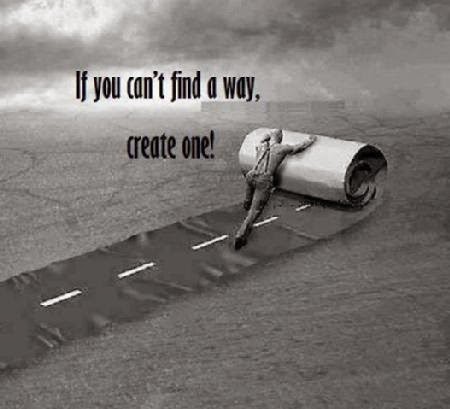
 Planning provides focus in strategic direction. It provides clarity of where the business is and where it is going as well as a vehicle for getting from where you are to where you want to be. Planning time out of the business provides time to reflect on personal and corporate goals, time to share and channel new ideas while reviewing existing activities.
Planning in a structured and open format develops clarity of purpose and a clear understanding of the organisational and individual skills people have and can use to leverage advantage. Bringing in outside views widens the planning horizon, a fresh perspective to drive businesses forward. This is why many successful businesses use non-executive directors or outside specialists to help drive their business forward. That is one reason why so many people volunteer to get support from people like the Dragons from Dragon’s Den, they are looking for expertise and advice which gives them confidence to go forward as much as the money.
Planning provides focus in strategic direction. It provides clarity of where the business is and where it is going as well as a vehicle for getting from where you are to where you want to be. Planning time out of the business provides time to reflect on personal and corporate goals, time to share and channel new ideas while reviewing existing activities.
Planning in a structured and open format develops clarity of purpose and a clear understanding of the organisational and individual skills people have and can use to leverage advantage. Bringing in outside views widens the planning horizon, a fresh perspective to drive businesses forward. This is why many successful businesses use non-executive directors or outside specialists to help drive their business forward. That is one reason why so many people volunteer to get support from people like the Dragons from Dragon’s Den, they are looking for expertise and advice which gives them confidence to go forward as much as the money.