Making Mentoring Matter

Mentoring is a long-term collaborative and confidential relationship where an experienced individual (the mentor) provides guidance, knowledge, and support to a less experienced person (the mentee) to foster their personal or professional growth. It focuses on building confidence, enhancing skills, navigating transitions, and empowering the mentee to develop their own solutions, rather than just providing answers.  Making mentoring matter in business creates a strategic competitive advantage.

That overall objective of empowering the mentee to develop themselves through guidance is ultimate measure of a successful mentor. Making mentoring matter takes several key cultural and skillsets to make it effective.

Making Mentorship Effective

Making mentoring matter inside an organisation requires a culture of mentoring to be built within the organisation. Mentoring can create problems inside a vertically structured business as it develops new lines of communication often across, through and outside traditional business structures. Dotted lines of communication and support can threaten traditional structures of command and control. 

To make mentoring effective it must be a strategic decision. Led from the top to move those traditional vertical lines of command and control to a newer often called networked structured models of leadership support.

Making mentorship effective typically consists of several key components. Successful mentors have to be good listeners, not just to hear the problems mentees are facing but also to understand the backgrounds and perspectives that have shaped and formed mentees experiences. Buying into mentees, seeing their potential and learning how to share stories and experiences is central to making a good mentor.

Mentee to mentor matching is therefore a vital skill, knowing why a mentor was selected to be paired with a mentee provides not only confidence but also clarity of the overall objective of the mentoring programme. Good mentors should be clear to understand what mentees long-term goals are and how they see the mentor assist them towards achieving them.  That can be career goals, or skill and experience goals.  

Effective mentoring always starts with good matching that builds a good mentoring relationship. That does not mean simply getting on or having some shared interests, but in mutual respect that enables and challenges both mentor and mentee to grow as people. A relationship that can open up both parties and evolve over the long-term.

What mentoring does for the mentors

Mentoring is not just for mentees. While it is their outcome that matters as a measurable result of mentoring, there are several reciprocal metrics which are as important in soft skills metrics in modern organisations.  

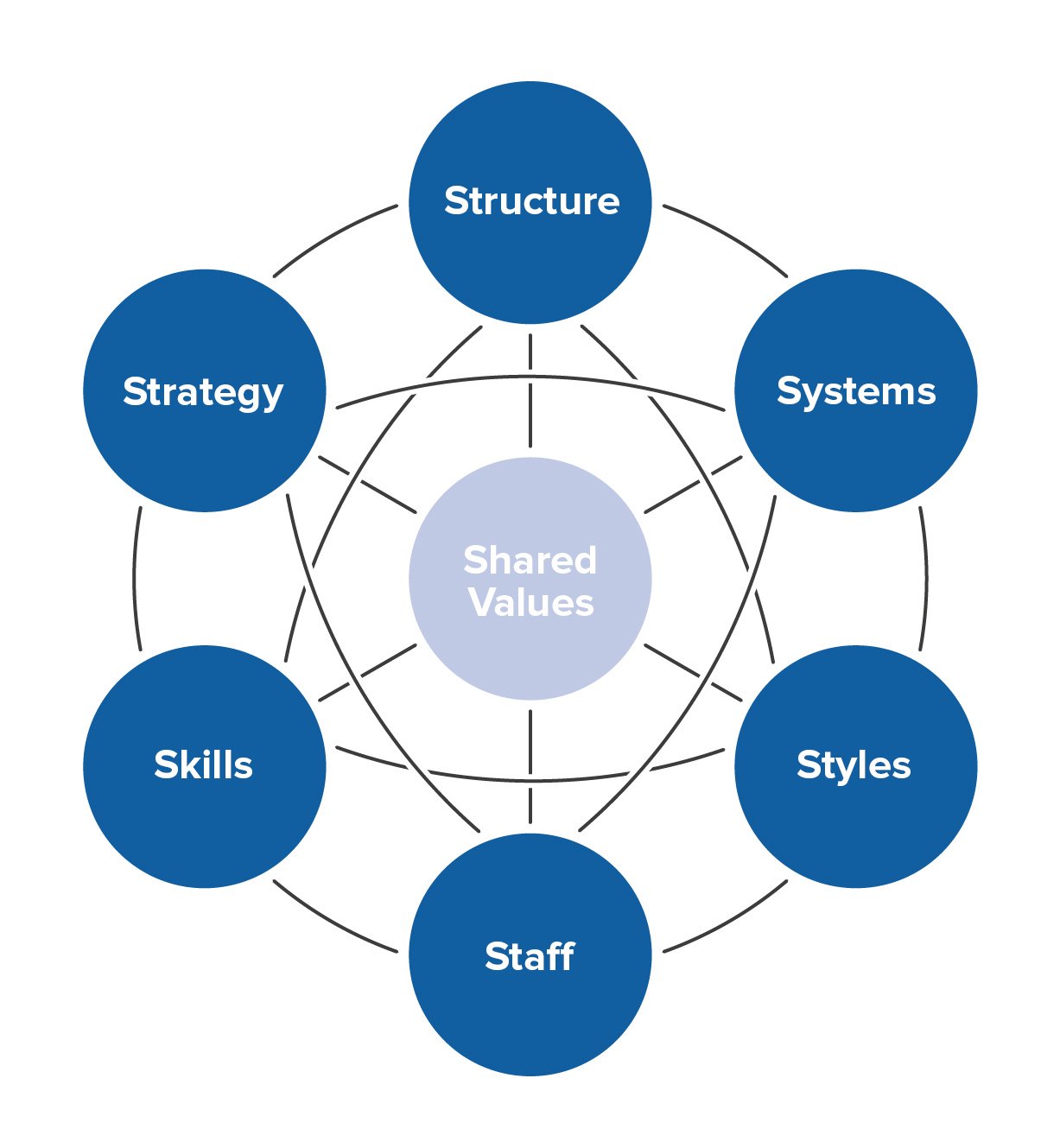
The McKinsey’s S7 model of hard S factors, Strategy, Systems, Structure is now matched by soft S factors in Style, Staff and Skills. It is today that soft skills is where the biggest competitive advantage can be seen in organisation development. Mentoring, the style of supporting staff with skills is very much driving how shared values are being disseminated through, across and into a business today.    

McKinsey S & Model

McKinsey S7 Model by Richard Gourlay

For mentors learning about different people’s challenges within the business, from departments, backgrounds and generational experiences all open up new learning for even the most experienced mentor.  Working with the next generation of professionals creates new challenges especially in a mentoring relationship. It is not command and control, or even a direct line of authority but one built upon mutual respect.    

For many mentors it is an excellent opportunity to develop softer leadership skills and to use their know-how, valuable networks and experiences to shape new people into the company. Giving back is also a powerful motivator for many mentors, a chance to use their experience to grow new talent.

Successful Mentoring Framework

To achieve a successful mentoring programme there are four key P’s Framework. which provide the foundations of any successful mentoring programme. These successful foundations are the definition of where any mentoring programme designer should start.

The first P in the framework is a clearly defined PURPOSE. This should ask the question why are we mentoring someone? What are the meetings and possible structure for?  Both parties should clearly define the mentee’s specific goals, challenges and expectations.  The purpose of the matching mentor to mentee should identify what the mentor offers the relationship in resources, connections and relationship building.  

The second P covers PREPARATION. For a good mentoring programme both parties need to prepare, putting their respective and matched agendas together. From identifying initial goals, both some quick wins as well as longer development goals, from the mentee though to mentors identifying possible mentoring paths of support. Mentors need to prepare deeper questioning on key topics and what experiences to share to make key points.  

The third P is PARTICIPATION. Mentoring is a long-term, often monthly arrangement, it is distinctive period but requires ongoing participation and commitment. Do both parties really value it? Participation is therefore essential form both sides, seeing it as important. Being present, having an agenda, venue, active full listening throughout, ensuring notes and action plan are made and followed through.

The fourth and final P is POSSIBILITIES. The outcome from participation is that the plan of possibilities from the initial plan to the evolving roadmap of the mentoring programme is mapped out in detail. A good plan exploring all possibilities and in priority format to achieve the original goals is essential.   

Mentoring Challenges

Mentoring starts as a good idea, and many people volunteer especially is the sponsors are Senior Leadership Team led. But for many mentors there is little training on how to make mentoring work.  

Mentoring often fails because the mentor does not know how to set up their role as a mentor.  Meetings can end up being chats and moans if not structured. They become nothing more than a nice to have with little progress and experience story-telling by the mentor if the mentor does not know how to structure their support. The 5C model of problem solving is useful here in creating high-value mentoring programmes. 

The 5 Cs Problem-Solving Model for mentoring

This framework provides structure for successful mentoring conversations:

  1. Challenges: Identifying and defining the specific difficulties the mentee is facing. 
    • Think SMART goals not “better at wishes”
  2. Choices: Exploring various paths or options available to address the challenges.
    • Create several options and scenarios routes 1,2,3 to support mentees  
  3. Consequences: Discussing the potential positive and negative outcomes for each choice.
    • Change shapes and reshapes people and relationships, make sure that mentees have a wide base of skills for any new role or relationship. 
  4. Creative Solutions: Brainstorming novel ideas, with the mentor sharing experience to offer new perspectives.
    • Bringing new ideas and researching all possible options should be discussed and evaluated with mentees with consequences and requirements in commitment fully discussed.
  5. Conclusions: The mentee makes a final decision and commits to specific next steps.
  • It is always up to the mentee to make the final decision and to make the first step. Mentoring moves at the pace of the mentee’s movement.

These 5C’s help mentors become effective mentors, and provide the structure to making mentoring matter.  Get in touch here today to learn more.

Creating A High-Performance Team Culture

In the contemporary business environment, cultivating a culture of excellence is often regarded as the pinnacle of effective leadership. Such a culture serves as a strategic asset, providing a distinct competitive edge that facilitates sustained growth, enhances employee engagement, and improves profitability. Creating a high-performance team is therefore a strategic decision a leader takes to create and sustain competitive advantage.

A high-performance work culture extends beyond leadership alone; it embodies an organizational ethos where every individual is dedicated to achieving outstanding results. This necessitates an environment where employees feel empowered to challenge existing practices, seek continuous improvement, and foster innovation—hallmarks of an environment rooted in excellence.

The Purpose of Excellence

For any leader, establishing a high-performance culture is not an instantaneous act but a deliberate strategic endeavor. It involves creating, nurturing, and maintaining an organizational climate conducive to excellence. The underlying motivation— the “why”— centers on the tangible benefits such a culture imparts within its sector. Achieving this requires significant investment in terms of time, commitment, and energy; however, the resultant advantages justify these efforts.

The rewards of fostering a high-performance culture include enhanced innovation leading to increased profitability, improved market positioning, stronger customer acquisition and retention, and superior talent retention. As articulated by Dan Pink in his seminal work Drive, motivation rooted in mastery, autonomy, and purpose depends fundamentally on a robust supporting culture. Without such foundational elements, these motivational drivers cannot realize their full potential.

In essence, cultivating a high-performance work culture is an essential strategic priority that yields long-term organizational resilience and success.

Leading by Example

At the forefront of any environment of excellence is the leadership’s vision. A vision explains why we are creating a high-performance culture. That starts and ends with the leadership’s actions in everyday behaviours. Are they walking the walk or just talking the talk?  Leaders must create the right environment for a culture to exist. Leaders must focus on developing the “How do we do this better” questioning while creating a safe space for people to try, and that starts by asking awkward, uncomfortable and challenging questions.  

To get better we must break what we have always done.  Not accepting the ‘good enough mentality’ or ‘it’s not costing us anything to keep it as it is’. The other major danger leaders’ face is letting a committee acceptance approach to retain the status quo. Ask the importance question ;does everything we do add value to the customer?” or “Can we find new ways to add value to our customers?” Is a better question! As is; “What do you think we should do differently to be more valuable to our customers?” This mentality creates an engaged workforce that challenges them to not only try but feel safe in looking for new ideas. 

Leadership’s Role in Cultivating a High-Performance Culture

Central to fostering an environment of excellence is the clarity and consistency of leadership’s vision. A compelling vision articulates the purpose behind establishing a high-performance culture, serving as a guiding light for organizational efforts. The realization of this vision hinges upon leaders’ daily actions and behaviours—whether they exemplify the standards they set or merely articulate ideals without tangible follow-through.

Effective leaders are tasked with creating an environment conducive to continuous improvement and innovation. This involves cultivating a mindset focused on “How do we do this better?”—a question that encourages reflection, learning, and adaptation. Equally important is establishing a safe space where individuals feel empowered to experiment, challenge existing practices, and voice difficult or uncomfortable questions without fear of reprisal.

To progress beyond current limitations, organizations must be willing to challenge ingrained habits and assumptions. This requires moving away from complacency rooted in the belief that maintaining the status quo incurs no cost or consequence. Instead, leaders should consistently ask whether their actions genuinely add value to customers. An even more impactful inquiry is: “What should we do differently to enhance our value proposition?” Such questions foster an engaged workforce motivated not only to try new approaches but also to feel secure in taking risks that lead to meaningful improvements.

Creating a Culture of Excellence

Starts with a clear statement of intent, what are the standards you expect to see throughout the organisation. Define what excellence means within your organisation. By establishing expectations and defining them in language to each person within their role. That requires that every touch point, from recruitment, people engagement and development through to KPI and day-to-day operational and behavioural activity. 

Leaders must display that excellence. By leading from the front, especially in the small day-to-day people engagement behaviours in listening, learning and problem-solving. Setting the standards can only come from leaders and their behaviours. 

To create a high-performance culture to exist people must be continually learning to create continuous improvement.  A learning culture in both formal, professional development and informal learning especially with mentoring and peer support is an essential pilar of the environment of excellence. In Dan Pink’s book Drive several examples of learning reflect this in different environments in delivering what he terms autonomy, from Google’s 20% employees time self-invested in personal projects through to recognition of learning in what he terms mastery of a topic area.  

The key element leaders need to focus on are in creating a positive challenging environment. One where people feel safe to challenge themselves, challenge the status quo and challenge why not perception.  That challenge leads firstly ‘a growth mindset’ asking where can we take the organisation in both capability and capacity? Intellectually that is supported by a clear vision of where we want to be that supports and sustains that challenging drive to be better. 

High-Performance Culture

Trust Matters

A growth mindset is built upon doing the right things consistently. From believing in others intentions, to let them look beyond what we currently do, through to creating an emotional safety within their organisation that fosters integrity and responsibility. 

Leaders must enable a safe fail learn faster trusting mentality, that rewards people who try and learn rather than those who play it safe or look to shame those who fail. Giving accountability over to people to try something new and developing feedback to enable fast learning rather than running away from early failures. 

That emotional safety is a cornerstone of a high-performance culture. As Steve Jobs famously said, “There is no point hiring the brightest people and then telling them what to do?

Feedback Drives Culture Change

Feedback is an essential element of a growth mindset. Ultimately feedback is the only outcome that matters in a high-performance culture. Excellence-driven organisations create multiple open feedback loops. Feedback loops are the result of true honesty within an organisation culture and drive the ability for growth to happen both rapidly and constructively. 

Honesty in feedback is not a negative, but an essential element in challenging assumptions. Where can it be better is what feedback should be focused towards. So positive feedback loops including arenas such as brainstorming, project design, pilot testing as well as process engineering.  

Supporting High-Performance Teams

An environment of excellence is underpinned by a continued support for others. From being available to walk the walk around the whole team, through to resource provision and mentoring through to the essential leadership role of being a resource provider. 

Supporting cultures are enablers and sustainers of an environment of excellence which underpins high performance. A culture of supporting is linked to the overall vision and capability creation enabling individuals and teams to perform to new higher standards. Support in resources is not just financial, although that is important but also in ideas, emotional engagement, in having time to listen and understand as well as connect people to the right resources.  

Resisting Resistance 

A supporting culture is also essential to deal with managing employee and stakeholder pushback. Dealing with change is the single biggest challenge to creating an environment of excellence to deliver a high-performance culture. Resistance comes in many formats form active hostile resisting actions through to passive resistance in non-compliance.

A supporting culture is the most effective way to overcome the lack of active engagement. For an environment of excellence to emerge leaders must acknowledge resistance from those who feel threatened. Listening to their concerns, perceptions and reading between the lines as to why they might or are resisting and offering solutions without compromising your goals as a leader are vital to create the environment that delivers high performance culture.

Defining expectations, often turning aspirational language into practical steps and outcomes often reduces and mitigates fears and uncertainty in change. Clear expectations matched by tangible behaviours which can be trained and adopted overcome misunderstood aspirations.

Supporting others must also deal with underperformance. Ensuring that performance matters and is impact is fully realised and clarify that they must achieve the new standards with support and timeline that improvement. 

While many leaders overfocus on those underperforming an environment of excellence requires leaders to shift their mindset away from underperformers to those who excel at making change. 

“Don’t reward failure with your time, reward good behaviours with your time and resources”.

Investing your time and praise for those going in the right direction is the right messaging inside any organisation. While initially seen as counterproductive to good management, deal with under performers it works to spend time working with those who get it to pull and nudge those who should get it to make the move. This not only drive the environment towards excellence. Not only that but is far more rewarding and less energy draining.  

Leading by Stepping Back

To deliver a high-performance culture we need an environment of excellence, but that is not singularly down to the leadership team. Creating champions across and throughout the organisation creates a team effort in delivering results. Engage employees to construct it, find champions from early adopters, create champions of change for each stage of your development of the environment, so that you have a team effort and cohorts of people who are part of the solution which they can shape and drive. 

Leading from the back can only happen when champions are in place, and leaders can step back and see what is happening and where they need to concentrate their efforts and resources. If a leader only leads form the from then they often miss what is going on behind them. 

Stepping Back to Sustain Excellence  

Stepping back also allows leaders to ensure proper oversight and monitor performance throughout the organisation. Knowing where to pace change to find quick wins, and customer requirements and respond to pressures and opportunities requires leaders to be able to see and feel what is going on. Being a resource provider, a leader is there to be available to overcome barriers and develop team and cultural resilience.  

High Performance Culture

There are so many benefits to create a high-performance culture in today’s business world. Pushing people to do their best, and be the best they can be, delivering creative and innovative solutions that is recognised and rewarded. 

Building the environment of excellence within which a high-performance culture can grow, and flourish starts with a clear vision, supporting a growth mindset of trust and a supporting environment within which a culture can thrive. 

The end goal is creating an environment where everyone pursues being excellent in everything they do.

Like to know how we can support you create a high performance culture, then get in touch below.

Strategic selling see the world differently

What Makes Strategic Selling Successful

Strategic Selling

A good business is based upon a clearly defined business strategy.  Strategy is the central or macro plan for any business. It the fundamental overarching plan which everyone inside the business is pulling towards.  A business with a clear strategy in place knows where it is aiming for in its market sector. That clarity and purpose enables it to build a culture to support that. A key element of a successfully designed business strategy is that it translates into a clear sales strategy. That is the definition of successful strategic selling. 

Sales Strategy What is it?

A sales strategy sets out clearly what the business intends to achieve and how.  Rather than just setting out a simple cold and unexplained turnover goal, a raw number, it defines the market you are in. A coherent sales strategy combines a set of strategic metrics which build to a complete set of outcomes. A sales strategy is a clear direction to take for all business activities. It identifies: –

  • The structure and make-up of the market you want to succeed within.
  • Key major market drivers – what’s driving market’s existence and development.
  • Market dynamics – what’s setting the pace of change and evolution of a market 
  • The profile of the major market players and their position in that market.
  • And ultimately the optimum customer profile for your target audiences.  

Strategic selling is a sales framework that firstly identifies the market structure that you are operating within. While that sounds obvious, it provides that clarity of purpose that involves everybody within the entire company Ensuring that everyone is pulling in the same direction at the same time, a clear sales strategy unites a company behind the strategy. A sales strategy is not just for the sales team, it is for every department to be aligned with. It enables a sales team to build companywide cross-department relationships with multiple-decision makers in a potential customer’s organisation. It creates a buyer-orientated approach that focuses on the value the entire solution provides to the whole customer. This contrasts to transactional selling which focuses on just the product itself. 

Strategic Selling in B2B Environments 

Strategic selling it is particularly effective in B2B sales environments. This is where there are often multiple decision-makers coming from different departments that engage with the company. It moves selling from a salesperson’s role to a company wide responsibility.  

Strategic selling aligns the company towards the entire customer’s needs and expectations. An average customer decision typically involves seven people, all from different parts of a business.  Each potential customer comes with a set of unique specific needs, budgets, and decision-makers all in the mix. That’s why a well-defined sales strategy is essential to target and support winning over all the decision makers within target company.  

Long-term Success

Strategic selling is focused on creating long-term, mutually beneficial relations with target customers. It breaks down complex sales processes into simple actionable steps which evolve as the partnership with each client develops. While traditional selling focuses on the narrow and immediate benefits of the product, strategic selling’s emphasis is on the complete value it provides to the customer over a long period. 

Strategic selling is mainly applicable in B2B organisations where there is a high value stream relationship. Often there are multiple decision-makers and an evolving relationship or partnership between the two companies.  Selling strategically is therefore a business culture tailoring the product and or service that gives the optimum solution to all these problems.  

Strategic Selling Approach 

A strategic selling approach requires a good understanding of the market and who the key players. That knowledge also identifies who will resonate most and align with your brand best. This market alignment is fundamental to strategic success. Prioritising and focusing resources on target customers and their value streams. Where a company can add value is where they might positively respond and engage with you. It is an essential to understand behaviour traits, and as identified above, what is driving their sector within a market. This is where customer competitor assessments identifies opportunities for possible company entry. Even if it is no clear opening or immediate need for your product entry.  

A company market entry strategy is an approach that focuses on building alignment rather than peddling product. We align with and understand the target client landscape and strategic challenges they are facing before trying to sell. Learning how we can work with them to resolve them, putting us in the driving seat in their solution search. 

By developing a tailored and even joint solution, we skew or even actively remove the competition from the equation. The most obvious point is where a target customer wants to move into a new venture, or market area. That opens an opportunity to develop an entry strategy with a partner. This can be undertaken either as a joint venture or as their preferred partner. This locking in is the most obvious model. For strategic selling it can at any level of development of the target customers business evolution. Whether that be scaling up, service evolution, cost reduction, adding new value; the opportunity is there if a strategic selling culture exists.   

Classic Drivers Customer Change

Growth: The target customer is essentially aware of the desire to grow within a market or segment. Where their existing model is not suitable or competitive enough, so they will look at alternative models to get growth within their market. 

Problem Solving: The target customer has an issue, or an underperformance with their existing model. This is where they maybe open to new ideas and solutions. This is where they are researching how do something different to remove know pain points.  

Passive Observation: Here the target customer does not see a performance gap between what they desire and the reality, but they are aware that change is happening and potential for their position to become eroded opens doors for possible exploration of new approaches. 

Key Elements of Strategic Selling 

The key elements of strategic selling start with developing a strategic mindset by the leadership team. That clarity of purpose and position within a market, typically a developed or mature market, where there is a structured market with major players either in place or emerging. Without that foundation stone strategic selling is unlikely to be achievable.

Win / Win / Win Culture

Strategic selling identifies the triple win culture (Win / Win / Win), the customer wins, you win and the relationship between the two companies win. This triple bottom line is at the heart of strategic selling. It builds multi-level relationships across the target customer, a collaborative sales process involving identifying and removing the customer’s pain points with them and finally uncovering the real value of the relationship of the partnership with them.

Decision Making Unit and Process

The second key element of strategic selling is that it involves working throughout the entire decision-making unit (DMU). This shift moves selling from a 121 narrow transactional engagement, the traditional selling model, to one where the entire DMU are identified and actively engaged throughout the sales process. That really means not just for the sales period but as part of developing a long-term relationship with them.

Understanding that while other stakeholders may not be actively engaged in buying but are in the decision-making process of whom the business works with, and what criteria buying decisions are made upon is vital for successful strategic selling.

The second element here is for any target customer to know their Decision-Making Process (DMP) how do they buy? No two companies have the same process, in steps, time and people engagement.

If strategic selling is going to be successful then it’s not just about the people but the process they go though, step-by-step and language they use which you need to know inside out. How do they score and decide? Who has what influence over whom and when?

In simple transactional selling the decided decides but in complex B2b sales there are multiple voices and different levels of power and influence which the decider must engage with and respond to. If many cases the decided is there to sign-off on a decision rather and make it.

Customer Centric Approach 

This then leads to the third key element of strategic selling, implementing a customer centric approach. Meeting the unique needs of that customer, tailoring existing processes and sales approaching aligned with the customer priorities and needs to enable them to achieve their goals. The final part of this element is an on-going relationship. Not just a engage when selling approach which is the definition of transactional selling. Strategic selling continually engages and aligns with the customer. This is why it works most effectively with emerging and maturing markets and large players within it.     

The Personalised Sales Strategy for each Target Customer 

Strategic selling’s key output is the personalised solution which is presented over time to the target customer. It highlights firstly good alignment between the two companies and the measurable impact it will make to the target customer enabling them to achieve their short and long-term goals. 

The win/win/win mentality should be at the heart to the solution, identifying how your USP’s could with your approach will solve and add value throughout the target customers’ business. 

Strategic Selling Solution 

Strategic selling solution focus’s a whole company approach tailored to the target customers’ needs, addressing all stakeholder concerns and how you will support the customer throughout the relationship. In complex B2B markets an effective solution highlights the key must have elements that the target customer has identified to you. While also focusing on the ongoing relationship and the next stage development of the relationship. 

That move from a transactional relationship to strategic selling involves the whole team engagement and long-term often multiple project and product development. This creates a strategic alignment between the two companies develops within a market segment.  An effective solution highlights these elements and draws in the entire strategy not just the immediate product or service in question. 

Strategic Selling Summary

Strategic selling is a clear business strategy. It relies upon developing a culture of long-term relationship building with large complex companies in maturing markets. Targeted customers ideally need to be in the early adopter or early majority element of the market where the value-added elements can be easily identified.   

Engaging with target customers must be undertaken throughout the company. Not just at the buyer selling point but from top down and throughout the decision-making unit. Identifying not just immediate needs, but longer-term strategic goals and target customer development plans, identifying stakeholder needs and value requirements in the partnership. 

Once this is undertaken the presentation back to the target customer must reflect strategic goals as well as immediate quick wins. This is most effectively when seen as a multiple step or phase building programme, often by finding the door opener and trust builder before trying to move into the longer and more significant purchasing phases. Always focus on the value-added in the joint relationship and lifetime value which will out compete any transactional relationship that transactional competitors can offer.   

Like to know more then get in touch with Richard Gourlay here.

Growth planning in business

Turnaround Your Business: The Garden Rooms Case Study

Case Study a Garden Rooms business in Scotland

Turnaround Your Business with Richard Gourlay

A Garden Room

Turnaround Your Business

The owner of a Garden Rooms business in Scotland approached me to turnaround his business. Operating in a potentially growing market designing home garden rooms, such as offices, bedrooms and gyms while also still building home extensions. He was struggling to run these businesses, spending most time running around firefighting and dealing with unhappy customers. To turnaround your business often external advice and active support is essential, here’s why.

The Situation

The owner was trying to run too much at the same time, which put him under: –

  • Financial pressures: no real financial model and limited systems in place. With little cost management or operating and margins in place, putting continual pressure of the business’s finances and margin impacts. 
  • Operational issues: with no operating systems in place each project ran differently, which lead to a wide range of quality and complaint issues, including legal disputes.
  • Quality issues: with staff firefighting onsite with suppliers to get components to site on time, impacting upon delivery times, production and cost and quality impacts.
  • People issues: of unhappy and unmotivated staff, no one really knowing what they were being asked to do and good staff leaving. 
  • Ultimately there was little customer focus and significant firefighting, unfinished jobs with a long list of snagging issues to be resolved.

Our Solution

Working with the key people we developed a clear business strategy and culture shift for the business, identifying the businesses core value proposition and a customer focused ethos.

This led to a complete process of change and focused team actions to re-invent the business around its core value proposition and improvement plans to redesign out all root cause issues within the business. 

Following this process we then developed a customer process map.  This identified every customer value added step and supported the customer through the entire process. With a new marketing strategy also in place we were able to improve: –

  • Customer engagement and acquisition which led to an improved Average Order Value (AOV) of 55% in one year.
  • Ownership of issues by frontline staff to get it right for the customer, reducing snagging and issues to a controlled minimum, with everyone pulling together.
  • The development of product improvement and a full product range to support customer retention and conversion, making the business the dominant player within the target market.

This Enabled

We worked with the owner developing his business and his skills to lead his business more successfully, providing support and guidance throughout. This was supported by clear business planning with the owner with a full strategic and operational business plan in place. 

  • Clear success goals shared with the team. 
  • A forward annual business plan covering every aspect of the business. 
  • Sales goal setting which supported and underpinned the financial plan.
  • A comprehensive financial and cashflow model to ensure the business is cash positive and profitable for the first time.
  • The owner was able to positively look at a trade exit strategy from this business. 

Turnaround Your Business

Revitalising, recreating or jest evolving your business is an essential requirement to become and keep being competitive within your market. Don’t wait until it is too late. The earlier a business leader identifies they could benefit from a strategic refresh the more options and quicker positive change can happen. To turnaround your business with Richard Gourlay then lets have a chat with Richard here now.