Making Mentoring Matter

Mentoring is a long-term collaborative and confidential relationship where an experienced individual (the mentor) provides guidance, knowledge, and support to a less experienced person (the mentee) to foster their personal or professional growth. It focuses on building confidence, enhancing skills, navigating transitions, and empowering the mentee to develop their own solutions, rather than just providing answers.  Making mentoring matter in business creates a strategic competitive advantage.

That overall objective of empowering the mentee to develop themselves through guidance is ultimate measure of a successful mentor. Making mentoring matter takes several key cultural and skillsets to make it effective.

Making Mentorship Effective

Making mentoring matter inside an organisation requires a culture of mentoring to be built within the organisation. Mentoring can create problems inside a vertically structured business as it develops new lines of communication often across, through and outside traditional business structures. Dotted lines of communication and support can threaten traditional structures of command and control. 

To make mentoring effective it must be a strategic decision. Led from the top to move those traditional vertical lines of command and control to a newer often called networked structured models of leadership support.

Making mentorship effective typically consists of several key components. Successful mentors have to be good listeners, not just to hear the problems mentees are facing but also to understand the backgrounds and perspectives that have shaped and formed mentees experiences. Buying into mentees, seeing their potential and learning how to share stories and experiences is central to making a good mentor.

Mentee to mentor matching is therefore a vital skill, knowing why a mentor was selected to be paired with a mentee provides not only confidence but also clarity of the overall objective of the mentoring programme. Good mentors should be clear to understand what mentees long-term goals are and how they see the mentor assist them towards achieving them.  That can be career goals, or skill and experience goals.  

Effective mentoring always starts with good matching that builds a good mentoring relationship. That does not mean simply getting on or having some shared interests, but in mutual respect that enables and challenges both mentor and mentee to grow as people. A relationship that can open up both parties and evolve over the long-term.

What mentoring does for the mentors

Mentoring is not just for mentees. While it is their outcome that matters as a measurable result of mentoring, there are several reciprocal metrics which are as important in soft skills metrics in modern organisations.  

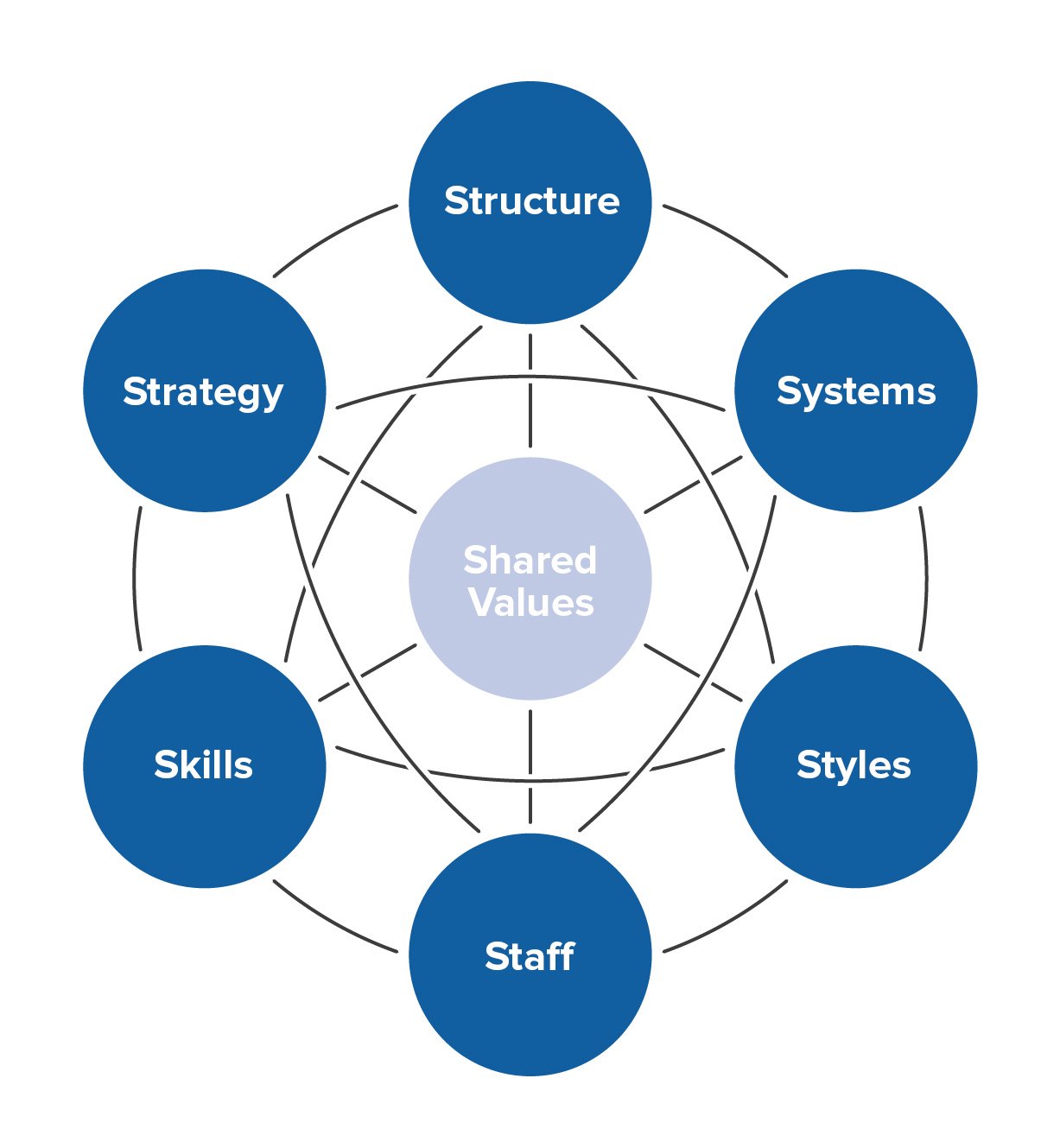
The McKinsey’s S7 model of hard S factors, Strategy, Systems, Structure is now matched by soft S factors in Style, Staff and Skills. It is today that soft skills is where the biggest competitive advantage can be seen in organisation development. Mentoring, the style of supporting staff with skills is very much driving how shared values are being disseminated through, across and into a business today.    

McKinsey S & Model

McKinsey S7 Model by Richard Gourlay

For mentors learning about different people’s challenges within the business, from departments, backgrounds and generational experiences all open up new learning for even the most experienced mentor.  Working with the next generation of professionals creates new challenges especially in a mentoring relationship. It is not command and control, or even a direct line of authority but one built upon mutual respect.    

For many mentors it is an excellent opportunity to develop softer leadership skills and to use their know-how, valuable networks and experiences to shape new people into the company. Giving back is also a powerful motivator for many mentors, a chance to use their experience to grow new talent.

Successful Mentoring Framework

To achieve a successful mentoring programme there are four key P’s Framework. which provide the foundations of any successful mentoring programme. These successful foundations are the definition of where any mentoring programme designer should start.

The first P in the framework is a clearly defined PURPOSE. This should ask the question why are we mentoring someone? What are the meetings and possible structure for?  Both parties should clearly define the mentee’s specific goals, challenges and expectations.  The purpose of the matching mentor to mentee should identify what the mentor offers the relationship in resources, connections and relationship building.  

The second P covers PREPARATION. For a good mentoring programme both parties need to prepare, putting their respective and matched agendas together. From identifying initial goals, both some quick wins as well as longer development goals, from the mentee though to mentors identifying possible mentoring paths of support. Mentors need to prepare deeper questioning on key topics and what experiences to share to make key points.  

The third P is PARTICIPATION. Mentoring is a long-term, often monthly arrangement, it is distinctive period but requires ongoing participation and commitment. Do both parties really value it? Participation is therefore essential form both sides, seeing it as important. Being present, having an agenda, venue, active full listening throughout, ensuring notes and action plan are made and followed through.

The fourth and final P is POSSIBILITIES. The outcome from participation is that the plan of possibilities from the initial plan to the evolving roadmap of the mentoring programme is mapped out in detail. A good plan exploring all possibilities and in priority format to achieve the original goals is essential.   

Mentoring Challenges

Mentoring starts as a good idea, and many people volunteer especially is the sponsors are Senior Leadership Team led. But for many mentors there is little training on how to make mentoring work.  

Mentoring often fails because the mentor does not know how to set up their role as a mentor.  Meetings can end up being chats and moans if not structured. They become nothing more than a nice to have with little progress and experience story-telling by the mentor if the mentor does not know how to structure their support. The 5C model of problem solving is useful here in creating high-value mentoring programmes. 

The 5 Cs Problem-Solving Model for mentoring

This framework provides structure for successful mentoring conversations:

  1. Challenges: Identifying and defining the specific difficulties the mentee is facing. 
    • Think SMART goals not “better at wishes”
  2. Choices: Exploring various paths or options available to address the challenges.
    • Create several options and scenarios routes 1,2,3 to support mentees  
  3. Consequences: Discussing the potential positive and negative outcomes for each choice.
    • Change shapes and reshapes people and relationships, make sure that mentees have a wide base of skills for any new role or relationship. 
  4. Creative Solutions: Brainstorming novel ideas, with the mentor sharing experience to offer new perspectives.
    • Bringing new ideas and researching all possible options should be discussed and evaluated with mentees with consequences and requirements in commitment fully discussed.
  5. Conclusions: The mentee makes a final decision and commits to specific next steps.
  • It is always up to the mentee to make the final decision and to make the first step. Mentoring moves at the pace of the mentee’s movement.

These 5C’s help mentors become effective mentors, and provide the structure to making mentoring matter.  Get in touch here today to learn more.

Like to know amor about mention then see theses links:-

Learn more about Mentoring by Richard Gourlay here:- Richard Gourlay Mentoring

Get in touch below to discuss your needs:+

Name
Email
Customers telephone number
How can I help you with your business or leadership skills?

Mentoring Services by Richard Gourlay

In Business Growth is not always Good Growth!

Business Growth is not always Good Growth, it can be Bad!

For every business owner growth is the ultimate measure of success, except it isn’t! Not all growth is good growth, and bad growth can have significant negative consequences. 

Growth is seen as THE measure of success in business. Leaders are measured by what they deliver in results, and growth is the simplest measurement to communicate. Headline results of increased turnover are always eye-catching news but may not be good growth.  Turnover, for turnovers sake, is often the most dangerous result a leader can deliver.  Growth sounds like a good result but not all growth is good. 

When growth at any cost becomes the sole focus, then leaders open the pandori’s box for the wrong types of growth.  Growth for growth’s sake is a high-risk business move. It sounds great as a headline but often masks what is really going on. The short-term benefits of rapid growth often come with long term consequences for any business. This is the difference between good growth and bad growth, which need to be clearly understood by owners and directors.

So, what is Bad Growth?

Bad growth is unsustainable. It’s a short-term grab that looks good but does significant long-term damage.  Bad growth comes in many shapes such as:-

  1. In grabbing market share: buying a low value contract to win a new customer, which reduces margin sets a trend to lower margins.
  2. In opening the wrong type of customer: which pulls the business to somewhere outside its marketplace, stretching the brand into different unprofitable places.
  3. Over rapid growth by buying market share: with a low-cost entry offer or product which stretches the company’s resources, from financial causing unnecessary debt, to brand stretch damaging brand value to customer and channel trust breakdown.

The outcome of bad growth is that it stretches and pulls the company in wrong direction. Pulling a company in a wrong direction, is short-term thinking. If it is recoverable will take time, money are human resources to correct short-term bad growth. But here’s the other key problem that bad growth creates. If we incentives and measure only the growth, then we reward the people who created that bad growth. By giving them rewards and incentives to do more of the same, feeding the bad behaviour.  That creates an empowerment and acceleration off driving growth at any cost and at all costs.    

Growth at any Cost

That growth at any, and all cost, becomes a mantra which often overriders all other business and brand metrics. The first casualty is margins which become eroded, followed by key areas such as investment in new innovative product is sacrificed for cash cows. That in turn leads to brand position erosion as the brand moves from where it was. Which is where its existing valuable customers want it to be. To a new market position, which results in its former customers moving away to new brands. 

Causes and Solutions of Bad Growth

Bad growth is an outcome of poor leadership decision making. When directors, press the green button to go for growth at any cost they are the fundamental root cause of bad growth. Instead they should be developing a clear strategic plan for the business. Identifying a company’s its true value and long-term aspiration must to be laid out by its leadership team.  

Clear guidelines of what the business and brand stand for is a must be defined. and protected Growth has impacts and good assessment of the full impact should always be made. If a business outgrows a market growth rate, then how is that being achieved, and what is the long-term impact on the company must be fully understood.  

Bad growth is often cheap and easy, but destructive and expensive in the long-term. The classic phrase there is no such thing as a free lunch’ should always be at the forefront of leaders minds. Bad growth takes the company in the wrong direction, moving it away from its market position, and most importantly away its existing loyal and valued customers.

Bad Growth Business Impact

As well as driving the company into wrong markets or short-term grab growth, bad growth often also has severe and significant internal impacts. Firstly, on the company’s values and its people motivators. Bad growth does not feel right to employees, demotivating good people and putting strains and stresses on systems and people as they are pulled in the wrong direction. 

Often bad growth creates internal conflict as people and systems are set up for good growth in product development, operating systems and customer focused activities. Challenging these, or short circuiting them to override them for bad growth goals creates tension and disappointment, demoting and demotivating even the most loyal employees.

Growth is a complicated goal and rarely one where there is easy low hanging fruit. It’s not just about increasing sales or market size; it’s about building a resilient, sustainable, and innovative enterprise. 

So What is Good Growth?

In business good growth is inextricably linked to a sustainable expansion strategy. It must be beneficial to all stakeholders within the business and to its external stakeholders especially its customers and channel partners. This holistic approach that considers the long-term impacts on the company, its employees, and customers. Good growth is led by a clear long-term strategy planning. It creates a steady increase in turnover and profit reflected in market impact of new product and brand position retention and enhancement.

Defining Good Growth

We can all see good growth after it has happened. We see more of the right type of customer for the business. They are spending more and are happy to buy more and more frequently. Happy customers come back and want more of both the same but also products and services which they want to a company to supply. 

Good growth is where: –

  1. Alignment is strong between all stakeholders: with shared values and brand perceptions work hand in hand in growth planning and delivery.
  2. Good growth is sustainable: it is both manageable and self-sufficient in generating products and services which sustain the growth of the business.
  3. Ultimately it creates long-term profitability: throughout the business, not short-term growth but long-term profits, such as shareholder value.      

The signature of good growth are therefore sustainability, profitability, and alignment with the company’s core values and mission. Good growth reflects the inter-relationship of all these three factors. It’s a type of growth that supports and is supported by the company’s overall strategic plan.

Benefits of Good Growth

Good growth benefits the whole business. Not only does it support long-term sustainability It supports brand reputation, builds and develops customer loyalty, and motivates employees. Good growth is enhancing the businesses whole value as it fits within the brand values and adds to the whole of the business offering. Each off these three elements protects the business from bad growth drivers and practices.  

Strategic Thinking

Leaders who foster good growth are adaptable and responsive to market changes. Good growth leaders are open to innovation and learning. In bad growth situations, leadership are often rigid, do not listen to feedback from customers and employees that could prevent negative outcomes. The outcome is more important than how they got there.

Conclusion

Good growth balances opportunities with threats to the business. It focuses on the three key elements of alignment, sustainability and profitability. A good growth culture ensures it is aligned with all stakeholder and company needs. It is sustainable so it can be replicated without damage to the brand, its customers and its future and finally it makes money for the business and enhances shareholder value.  

Don’t be led by people who over promise to grow your business, especially if they come from outside your sector or culture. If they don’t understand the sector and your market, they don’t understand good growth.

Contact Richard Gourlay
Contact Richard Gourlay to discuss your needs.
Name
Email
Customers telephone number
How can I help you with your business or leadership skills?

Great brand by Richard Gourlay leadership and strategy

What makes a great BRAND

What makes a great BRAND?

Despite what marketing people passionately believe most people don’t think about brands, they just get on with their lives. The coffee they buy, the supermarket they go to and petrol station they visit happen almost by accident. In Britain today we are too busy to think through these everyday inconsequential purchases, focused on saving time, not forgetting something or rushing from place to place on a tight deadline. So do brands matter as much as they used to and if so why and how?  Brands matter where consumers can value them.  In today’s wealthy world every product or service perceives itself as a brand, even if it is just a label. So what makes a great brand?

Consumer Choice 

Let’s start with the basics, the consumer has choices. Endless choices if they choose to use them. But in many everyday cases as in my examples above, the consumer sacrifices those choices for simple expedience. The inability to see (or value) brand differentiation, between Starbucks and Costa, between Tesco and Morrisons between BP and Shell, and yet they each fight for space in consumers minds through tiny differences which if we stop and think about do actually exist and we the consumer do actively value.

So much more than First Impressions 

So in today’s Britain, what is important about a brand? Is it the halo effect, the first impression, like the smile on the front of a car or is it something more, something deeper and more tangible? Ask the owners of Sunny D (the 90’s orange juice lookalike) and you will find that the halo effect does not last if your brand is not true to itself and to its consumers. Customers have to believe in a brand, it must tell the truth, be transparent and honest if it is to be successful. Gerald Ratner (former MD of Ratners the jewellers who said about his products “because it’s total crap”) also found out that in today’s world everyone must truly believe in the brand, not just the marketing department but the whole company has to believe it and most importantly practice the brands beliefs.

Clear Brand Strategy 

Being clear and precise is also important in the company’s messages for a brand to succeed, a strong undiluted brand message must enthuse internally but must also consistently connect with customers through touch points, look at Innocent, Dorset Cereals or Apple as classic examples of touch point. They also demonstrate a clear story delivered with passion about who they are what they do and why they matter. This focused and consistent message is not just a marketing message but an ingrained set of values which consumers buy into with passion. These brands not only position themselves as premium players in their fields and earn more but they also continuously find new ways to spread their key messages to customers, they have a clear brand strategy to achieve it.

Everyone Lives the Brand

Another vital aspect of any brand success is that the people within that brand demonstrate what they preach, they live that lifestyle, support that brand and contribute to its success. It is their lifestyle, it is a part of the way they and their brand do business.

Great brands go beyond the brand to understand its real value to existing customers but also to tomorrow’s customers.  Whether it is a family run local shop or a global supermarket chain great brands position themselves so they develop and hold a market position to develop long-term success.

Vision and Purpose

Great brands create, sustain and evangelise a culture which supports and drives their brand. Creating a culture which underpins an organisations vision and purpose is a key prerequisite for ensuring sustainability of a great brand. Sustainability of a vision can only be achieved if the organisation is supported by an underlying culture which fits with the brands ethos.

Great brands can only transpose from the innovative visionary founder if they create a supportive culture to sustain the brand. An effective and appropriate culture is one which supports the brand and ensures it is can sustain its market position over time.  Great brands sustain themselves through a great culture.

The culture of a brand, otherwise seen as the handwriting of the organisation, enables sustainability of the brand over time. Culture today matters from how people work together through to acquisition of appropriate talent. The right people are drawn to a brand they aspire to be part. Business partners focus on brands with likeminded cultures andante to be part of a great brand. In the exact same way customers aspire to be associated with a great brand.

Great Brands are not Labels

Great brands drive markets. By challenging them through innovation and changing perceptions. Labels on the other hand feed off brands by picking of successful innovations for downstream ‘me too’ market following customers. Great brands invest high proportions of their resources in driving markets forward, through innovative products and services. Great brands are seen to out invest other players more double the the market average.

Creating innovative pipeline cultures thinking long-term make positions rather than short-term tactical single product successes. Labels focus on creating  market winning season products, they act as followers often being low-cost alternatives to the brand leaders in any sector.  Brands focus on the longterm innovation which shift the paradigm of relationship with the customer through the brand.

Great Brands Add Value

Great brands also develop their own uniqueness, not just the product or service but the whole package is how we do it around here. There needs to be not only consistency but the brand hand writing and value on how they do it. The best brands always develop singular simple signals for customers, cutting through jargon to create clarity without patronisation.

For brands to succeed in today’s global markets these golden rules have never been more important as consumers have never had so much information, but if you follow these simple rules of brand success you can develop and maintain a great brand.

Looking for Advice  

If you want to develop your company’s brand and are looking for some advice on developing your company, its marketing, its sustainable competitive advantage then contact us at Cowden  to see how we can assist you, or read more about us in this blog or at Cowden

Click below to follow Richard Gourlay on other social media:-

Website – Linked in – Twitter – Facebook – Blog

Cowden Consulting is a strategic planning and implementation business which works in partnership with customers to grow and develop their business, contact us to learn more.

Posted 1st December 2011 by Richard Gourlay

Location: Old Glenstocken, Colvend, Stewarty of Kirkcudbright, Galloway

Labels: brand brand identity brand strategy brand strength branding business success marketing strategy strategic direction strategy sustainable companies values vision

SaaS Business make you own path by Richard Gourlay

How Steve Jobs changed the World

Strategy: How Steve Jobs changes teh world by Richard Gourlay

Apple’s founder and talisman, Steve Jobs has finally had to step down from running the world’s most successful company.  It is probably overdue that the world recognises this brilliant strategist who changed the world.  Here’s how Steve Jobs changed the world.

Had Steve Jobs just set-up Apple he would have gone down in history as a great inventor.  But to have done it twice over with the same company, while in the process creating the world’s biggest company, surely makes him the greatest ever.  Possibly his most important contribution was that he created markets and then the best products possible for those new markets.  Steve Jobs understood that the technology needed to work for customers, rather than expect people to work the technology.   

A Brilliant Visionary

As a brilliant businessman and strategist, he more importantly created world class products and ran the company that delivered those products to market. Most superb inventors just invent, and most great directors’ focus on leading. To do both simultaneously to such a high standard is an outstanding achievement.

Steve Jobs is so unusual because he understands that great technology does not sell itself. That to have great technology you have to be passionate not only about what you produce, but also about the world in which your products exist.

Steve Jobs a brief history

  • 1976 started Apple with Stephen Wozniak to make and sell printed circuit boards
  • 1978 launched  a new disc drive which made the money to invest in whole computers
  • Launched the revolutionary Macintosh computer in 1984
  • Ousted from Apple in 1985 and returned after creating NeXT in 1996 which Apple bought
  • Created Pixar with $5 billion in box-office sales, sold for $7.4 to Disney in 1996
  • Created the i-generation with more to come such as iCloud and entering the TV market

While to many who did not understand his holistic strategy, they looked for and saw flaws. They tried to stab the ego and even removed him from his own company (to play safe with what he had produced as a single new product).  He played the long game recognising that the world would not be changed overnight. This was his strategic master-stoke.  He got the timing right by understanding the big picture and knowing when to strike.

A Difficult Man To Work With

He has been described by those who have worked with him as wilful, irascible, temperamental and stubborn, to name a few.  But can anyone do so much without at least those characteristics to change the world?  Other words, which people often use to describe him, include perfectionist, insistent and mesmerising. These words are the ones which the world will remember for. These drove him and describe how he has achieved such global success.

As a manager he had difficult dealings with many people at all levels, from investors and employees.  Management and human relationships was not Steve Jobs’ forte. These difficulties made him human. They were simple human failings which showed he was not perfect, but not issues which limited his vision or aspirations.

Steve Jobs Stanford Address

In his Stanford addresss (click here to see it here) in 2005 he explained what made him, drove him and continued to motivate him to become the person he was. This address is one of the few times he spoke of the huge success for which the world will remember him for.

Steve Jobs changed the world.

He saw a world revolution in technology before anyone else, and saw how he could drive that change. Great strategic thinking not only thinking about change, but also the impact of that change will have. That’s what makes him simply the best. Other owners and directors were working on improving their share price, or becoming number one with their new product. Focusing on the today, this month’s or this years priorities, not on changing the world. Steve Jobs looked beyond the single product to look at the whole picture of what a new world might look like.

Steve Jobs drove Apple to rethink the world and in doing so became its biggest player. His line in recruiting John Sculley from Pepsi “Do you want to sell sugar water for the rest of your life or do you want to come with me and change the world”. This sums up his strategic brilliance.

Steve Jobs Visionary

Evidence of this brilliant approach comes throughout his career. From using Vangelis’ Chariots of Fire music to launch the Macintosh, through to his unforgettable iPod launch where with a huge back screen shot he casually produced it from the back pocket of his jeans! Steve Jobs has learnt how to successfully engage with audiences. Every product is meticulously planned with product lined up to two years in advance, with innovative marketing from start to finish.

Moving From Technology to Retail

From a business which started out a just selling technology, it is now seen as having the best retail environment. That retail environment created places people actually want to visit.  Apple shops where the focus is on excellence, not on pedalling technology cheaper than the next retailer.

Steve Jobs has always had an eye for detail. His artistic flare turned geeky boxes into works of art. Steve want on a calligraphy course which led him to have a non standard font, Apple Garamond created rather than traditional New Roman Times font. Something he goaded Microsoft about at a high school speech some years later. That attention to detail is what demonstrated his perfectionist approach and left the competitors looking and feeling like they were in the dark ages.

Think Different Campaign

Apple’s “Think different” strategy has worked so well since 1997 because it touched people who felt there was no alternative to Bill Gates’ Microsoft monopoly of software. Think Different also drove change for both the 50,000 Apple employees and allowing his strategy to infect and spread globally.  It was not only technical people who bought into Macs but a whole new generation of users, who found that there was a credible alternative that did more than just be a glorified typewriter.

While Apple was never one man.  Steve Jobs legacy will be difficult to estimate for many years to come as the world’s most successful businessman. The old adage, it is not what one has done that counts but what one leaves to grow, that is the measure of a man’s success. It will take time for the world to see his true legacy, but the following puts some numbers behind this success.

Since Steve Jobs comeback in 1997 Apple has sold:-

  • 26 million iPhones
  • 60 million computers 
  • 200 million iPods
  • 1 billion iTunes songs   

Apple is currently valued at $356 billion ($2 Billion ahead of Exxon). Making it the largest company in the world. Last quarter alone Apple profits more than doubled to $7.3 billion. Sales rose by 82% to $28.6 billion by selling 20 million iPhones, 9 million iPads, 8 million iPods and 4 million Mac computers.

Steve Jobs announcement of his retirement wiped $17 billion *(5%) from its market share. But over his leadership he has increased its share value by 9000% since 1997.