Business success in business supported by Richard Gourlay

WHY really matters in influencing consumers buying habits

WHY Customers’ BUY 

WHY really matters in influencing consumers buying habits in today markets. Back in the early 1980’s customers used to buy what companies made, went where they sold it ,and bought what they promoted.  That was the age of big marketing and sales budgets, when big adverts worked.  Driving demand through pushing products down channels, offering promotion and celebrity endorsement to generate business.

By the late 1980’s the age of the Unique Selling Proposition (USP) dominated: we are special because….. so you will buy’! So the world did as it was told: “we make what you want because we tell you want you want because we know about your needs”.  This relied upon trust in a brand by the public, which in a pre-internet world gave complete control to the brand and the consumer relied on marketing messages coming out.

People buy if they trust the brand they are buying from. In the 1980’s people trusted brands because no-one questioned them. A lack of information coupled with a belief in household names meant that people’s buying decisions were based upon a limited width of information upon which all buying decisions were made.

Today the world has changed. The sources of information have increased dramatically. The transparency required by companies is now at a level of how the organisation operates. Every aspect of what and how a company operates is under total scrutiny from a whole range of pressure and interest groups. Every aspect of ever action is recorded, analysed and evaluated. Business leaders today live in a totally transparent world, and the measures of trust are now very different.

Trust, the intangible combination of character and competence which all successful brands must develop and sustain is mad cup of a whole series of complex elements.  The importance of ethics in today’s business is an essential characteristic which purchasers expect their brand to portray in envy aspect of its behaviour. That makes it a key priority for leaders’ to focus on within their role.

Honest is Essential in WHY Consumers Buy.

Ethics came play such an important element of purchase decisions at the same time as the age of information changed what people could find out about a brand. As the internet began its infancy, the power of globalisation was laid bare by the internet. People asked as much about how companies did things as well as what those products did for the buyer?

Where products were sourced, made, shipped and by whom now became important. Why were the premium footballs, such as those which David Beckham kicked, being made by blind children in India for a few rupees. Why were the clothes models wore being made in sweat shops where workers earned less than for a dollar a day? Honest is now essential not just in how a brand portrays itself but in its complete supply chain, marketing activity and in its contribution to the world it operates within.

A Business Cannot Hide its Activities

The internet changed how the media could communicate, explaining how household names operated and could afford those huge marketing budgets. This forced companies to change their practises (and their internal policies) by educating and fighting back against the likes of Naomi Wolfs’ No Logo expose for example.  The brands who recognised that they could no longer hide their activities became more open and honest and developed trust, while those which did not, suffered public shaming and demise.

How business operated mattered, and so in response companies upped their awareness of their social impact and visibility through corporate social responsibility. How people did things mattered not just when the likes of Bhopal and Exxon Valdez disasters struck, but in everyday life.

Fair-trade has become a household name in consumer goods, with high street stores vying for credibility of having an ethical policy, supporting local goods and having transparent policies of how they operate. This gives more confidence but leaves companies open to further scrutiny and often to unsatisfactory answers to vital key questions, not at least within developing countries, who are now the fastest growing emerging markets for many brands.

Ethically; WHY should I buy from you?

The biggest question which consumers and business now asks people is why businesses are doing these things.  Everyone has become so empowered with information sources that people want to buy the WHY, not the what. Buyers want to understand the ethics of the company and importantly the people behind the decisions it takes. Customers want to know that these decisions accurately reflect the real cultural and values that company has, not just the marketing hype, which the brand portrays. Today this is the real power of the internet.

What’s the real purpose of the company, who and what is driving it and what does it really believe in and stand for. No longer is a small donation to a local charity enough to say it supports the community, customers want to know how much, who gets involved, is it company wide and deep or just a year-end tax saving. In today’s world the importance of ethics in today’s business cannot be understated for leaders to focus upon in their role.

Ethical Values Being Lived

In fact the world has changed completely, confidence comes not from what you say but why you are saying it. The educated and informed world means that it’s not just politicians who have seen their reputation tarnished but any business in any sector who does not explain it why factor.

It’s not just whistle blowers who expose mal-practice in today’s world, everyone is communicating through so many channels, from traditional word of mouth, through social media and beyond into a connected world, where reputations must be transparent. As everyone’s voice matters, being ethically transparent, open and honest is now essential if a brand is to be trusted.

Winning Life-Long Customers Requires Integrity

Winning customers is no longer all leaders have to focus on. Finding talented staff, channels partners and customers is now a multifaceted challenge for leaders to deal with. Ethical short-cuts damage brands reputation and those damaging allegations now stick, and become magnified to stakeholders as statements are now online, like a bad trip advisor review, it never goes. A tarnished reputation is exactly that.

No matter what sector you are in, understanding the  power of the internet in sustaining your reputation is essential and never more so than in explaining why you are in business and why you matter. The importance of ethics in today’s business has never been so important to establish and maintain.

So does WHY still matter. YES more than every before in a global world honesty, transparency and integrity matter in building and retaining trust with consumers more than every before.

Like to learn more, then contact us at Cowden or see our website or social media channels for more about Cowden Consulting:-

Website – Linked in – Twitter – Facebook – Blog

Cowden services: business planning, strategic planning, business development, strategic marketing, Return on Investment, director development, director mentoring.

Cowden works with business leaders throughout the UK to improve their business.

Successful Leaders Plan Their Business

Business Planning

Business planning often gets a bad press.  Yet those who do sit down and plan their business are so much more focused, confident, and successful than those who float along with the economic tide. Successful leaders plan their business, so they can focus on leading their team to deliver their plan. Over the past ten years as a strategic planner we’ve worked with hundreds of business owners and seen how those that create a plan and implement it. Those that plan their business do so much better than those owners who try aimlessly lead their business on a wing, a prayer or a dream.  Successful leader’s plan their business, so that everyone knows where they are going what their role is in achieving that success. The way forward in business, clear vision and direction supported by a supportive culture and a clear business plan According the latest BERR report, Small and Medium-sized Enterprises (SME’s) together accounted for 99.9 per cent of all enterprises, 59.8 per cent of private sector employment and 49.0 per cent of private sector turnover. SME’s really do matter to the British economy, and yet they receive little effective support from Government agencies despite being the backbone of the economy, employment, and innovation.

Why Business Leader’s Don’t Plan

“If you don’t make things happen, things will happen to you” Lanes Company Having questioned business owners over the last decade the reasons why owners have not put a plan in place and then executed it, the excuses range from not having the skills, make the time, or have the conviction of their thoughts. Owners know they should have a plan ‘we had one when we first started, but have not looked at it since’ is a common theme. The other is being too busy fire fighting to realise that preventing fires starting, is the best way to not have to fight them. Do business owners not see the value in developing a plan for their business? On the other hand, is the classic perception for business owners that frenetically staying alive is seen as being successful? For many not knowing how to plan is one major reason why people haven’t and don’t plan their business.  Where to start, and how to know what they are trying to achieve immediately puts people of planning.
Faults in Business Planning
Business planning is also often at fault here.  The most common reason new start up businesses create a business plan is to secure funding from banks, that’s when banks did fund business start-ups (now they just offer a high interest mortgage backed by the Government). Therefore, once people have received funding they no longer see the main advantages of planning (and the real advantages are not around money).

Business planning by Richard Gourlay creates a clear path and direction for your business.

Business Planning Skills – Have some GOALS

“The discipline of writing something down is the first step toward making it happen.” – Lee Iacocca Planning takes time, resources, (grey stuff) not the executive trip to some exotic away weekend planning, but some time allocated to review where you are as a business, how your sector and industry are performing and what you want to achieve in the future. Whether it is looking at the next year or planning the next five years, everyone who owns or directs a business is responsible for setting its direction. However, just having a plan in your head, with the classic defence of ‘its flexible at the moment’ is either ducking the responsibility or deluding themselves. The only way to have a plan rather than a dream is to have it written down, turned (if it is not already) into an action plan which is resourced and owned by someone to deliver. Only then do businesses go forward in a deliberate purposeful way. Only then do the right things happen because you made them happen and only then can everyone, employees, shareholders, customers, channel partners and even other halves, see your dream, share your dream, deliver your dream. That’s when planning works. It is a written document, which lives within your company, and it doesn’t matter if you are a one-man (woman) band or running a multi-national Plc.

What Business Planning Delivers

A clear business plan is the result of a process. It starts with thinking, then writing it down. That commitment itself is a sense-check, it creates a reality and makes the writer accountable for their thoughts. By writing down your business plan a leader takes a dream and begins to make it a reality. Others can see, critically evaluate, and judge the business idea and review the opportunity the plan intends to address. By doing this a business idea is viewed in the round, looking not only at the idea, but the actuality of what needs ot happen across all busienss area functions to turn the idea into reality.
“In the absence of clearly-defined goals, we become strangely loyal to performing daily trivia until ultimately we become enslaved by it.” – Robert Heinlein
business planning, business plan, the elements of a business model Planning provides focus in strategic direction.  It provides clarity of where the business is and where it is going as well as a vehicle for getting from where you are to where you want to be. Planning time out of the business provides time to reflect on personal and corporate goals, time to share and channel new ideas while reviewing existing activities. Planning in a structured and open format develops clarity of purpose and a clear understanding of the organisational and individual skills people have and can use to leverage advantage. Bringing in outside views widens the planning horizon, a fresh perspective to drive businesses forward. This is why many successful businesses use non-executive directors or outside specialists to help drive their business forward. That is one reason why so many people volunteer to get support from people like the Dragons from Dragon’s Den, they are looking for expertise and advice which gives them confidence to go forward as much as the money.
Plan More For Success
British business owners need to plan more often to keep being successful. Good planning creates and sees opportunities as owners and directors lift their heads up from the daily grindstone. How often should you plan? Well it all depends on the speed of your market’s evolution, but even stable and stagnant businesses should review their business every year, and not just a light dusting (add ten percent and change the year) but strategically review what and how well they are doing. It is only by looking for fresh opportunities and how to take best advantage of them, by planning your business around those opportunities, that companies successfully compete in today’s business environment.

Business Planning is not a four letter word

“An organization’s ability to learn, and translate that learning into action rapidly, is the ultimate competitive advantage” Jack Welch

The old adage, compete or get beat, is more relevant today than it has ever been. The rise of the Internet means there are no secrets, competitive advantage lies with those who can see an opportunity and adapt fastest to take advantage of it. Those owners and directors who see and go for opportunities become the stronger ones.  That is where good strategic business planning provides it real advantage. That’s why successful leaders plan their business to achieve that success. By orientating a company to where it can retain better, win new and develop existing customers companies that plan their success out compete in their sector, and equally importantly have everyone focused on where they are going. From the smallest to the biggest every business needs to have a plan that is written down, owned and guiding your business in the direction you want it to go. Good Luck
Richard Gourlay
@richardgourlay www.cowdenconsulting.com

Do YOU have a Plan for Growth?

Do you have a plan for GROWTH? 

 
Leadership is most often identified as someone with a clear vision to grow their organisation. Having a plan for growth within your business is often seen as someone on a mission. With a clear vision of where you want to be within your market. By definition, that means looking for and focusing on growth.  All leaders must focus on looking for growth and development of their organisation if leadership is going to be seen as successful. But many leaders do not have a plan for growth within their organisation. So do you have a plan for growth?
 

Do you have a plan for growth? By Richard Gourlay leadership consultant.  Leaders need a plan for growth

Do you have a clear vision of where you are going to take your business?  From understanding the market and its direction to where your business needs to be within those sectors, to profit from the growth within the market.  Leaders need to be strategically aware of their market if they are to find and focus on growth within their organisation.
 
Leaders must also redesign their organisation so that it can take advantage of growth opportunities, redesigning how a business operates to increase turnover and / or profits is at the heart of ensuring a leadership team has plan for growth.  Revitalising the sales and marketing operations is at the heart of acquiring more clients and developing improved relationship structures with customers and channel partners.
 
With a plan for growth leadership teams can reduce the amount of down time and focus their efforts on driving your business forward, with a clear vision of where you are going and why.  Successful businesses develop strategic plans to move their business forward, to grow and succeed, while being in control.
 
The first role af any owner or director is to have a plan, from star-up onwards (not for the banks) but for you to own and deliver. That plan needs to be kept alive, fresh and driven to focus on success and succeeding.


GROWTH needs a Strategy

strategy is a researched approach by the leadership team, supported by a detailed plan of continual action steps to get the organisation to where you want it to be. The reason strategies are so vital is they keep things moving, and in business, if you are not going forward, you’re going backwards, and that can happen very fast.  So, if you want your business to be successful and/or pay you more, having a strategy that focuses on growth is a must!
 
If you have no formal strategy to take your business to the next level you need to refocus your priorities right now to create growth, here’s the first stage of a growth strategy framework:
 

Create a clear vision of what you want to achieve:

There’s an old saying that you can’t hit a target you can’t see. Well your vision is your target. Your vision needs to be very clear in terms of what you want from your business, by turnover, profit, customer type or all three? What’s your ideal position in that market, do you want to be known as the premier supplier of your product or service, or a low cost or niche player?
 
What about your personal goals to support your lifestyle?  You need to be very clear about what you want and what you don’t want. Have a clear focus that will keep you aligned with your long term goal for you and your business. Make your vision aspirational, where do you want your business to be within the net 3 to 5 years? What will it look like and what will the business feel like to be part of?
 

Looking for Growth

Starting with a clear vision for growth within a business is the simplest and most powerful way a leader can motivate everyone. Growth is about understanding the drivers of growth within your business sector.  Knowing where a market is going requires leaders to step out of the day-to-day operational detail and focusing on the drivers of your market.
 
Growth is fundamental to a successful company. Finding growth does not mean just looking for growth in turnover, growth in profitability is by far the most valuable growth any leader can find. Growth can also be found in winning new market entrants; cross selling penetration to existing customers; launching  innovative products and services or premium pricing of scarce products.  Other profitable ways to grow your business include driving demand of premium and unique products, where your business has or can create a competitive advantage.
 
Like to learn more about creating growth for your business, then get in touch with us through the links below.
 
Cowden provides Strategic Planning Workshops which enable owners to create their vision of what they want to achieve. Our SPW faciliated workshops provide the opportunity for owners to work on their business not in their business. To learn more about Strategic Planning Workshops (SPW’s) or contact us by clicking Cowden to discuss your needs, or go to our website www.cowdenconsulting.com to learn more about us.
 
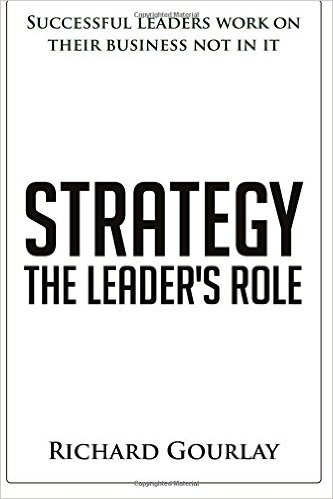
Like to learn how to find growth for your business? Then why not buy the book on how to build your successful business strategy, with the step-by-step guide on how to build your own business strategy, click the book below to buy now.
 
Learn more click here to read more about Richard Gourlay 
 

Strategy The Leaders Role, by Richard Gourlay 

Like to learn how to build your own strategy: then get the book with step-by-step guild to build your own business strategy, click the link below.
strategy, leadership and vision in business by Steve Jobs

Values matter in BUSINESS more than ever

Values in Business must be transparent

Business leaders face many challenges, some immediate and others which are not so obvious but can be far more dramatic to business success.  In today’s business world the way you provide your product or service and to whom, says more about you than how much business you do.  How you do your business now determines your current credibility and future success. Credibility is as much about your values in becoming successful as about the success you have. Values in BUSINESS must be transparent and lived by everyone inside the organisation.

Values matter in business like never before, by Richard Gourlay leadership consultant

For longterm success your values as an organisation as demonstrated by everyone inside your organisation matter to both existing, and potential customers, in choosing to do future business with your ad your brand. People have choices and they can now exercise them more freely than ever before, that means customers can access information instantly and make choices that are more informed. Examples such as Ikea’s staff misinforming undercover Times reporters about their sustainable and certified sourced products at a number of shops are one symptom of Ikea’s rapid growth and its underlying boardroom culture, allowing the core values to erode and trust in its reputation suffer. The damage to brand reputation from such as activities such as “greenwashing” create longterm brand damage as brands jump on popularity wagons.

Values Must Live in the Moment

Almost everything in life is in today’s world is in real-time and instantly communicated to circles of ever increasing influence and far beyond. A restaurant having  bad night can have a poor reputation before the starter has even been cleared away, as customers post live feed back to sites such as Qype or Trip Advisor. Therefore, before the waiter, maitre d’ or chef knows what’s happening the world outside, potential customers already do, through instant social media channels such as Twitter and Facebook, and are cancelling their reservations in droves. Live experiences matter when they happen not in the apology afterwards.
Leadership teams must ensure that their business values are being lived ever day in what is called real time. The real experiences customers face every moment are the living touch points of a brand experience.  Asking employees to make decisions and to own the decisions they make is vital for  brand to live in the moment, but they have to be supported by the leadership team and not criticised for making the calls they make. If the call they make is in the best intentions to support the customer but is outside the experience you wanted to give the customer then that is not the employees fault it is leadership teams in designing the experience.

Why clean lavatories matter?

The old adage that if you want to know how clean the restaurant kitchen is, inspect the lavatories! This is because they tell you how the restaurant values cleanliness, is a great example of modern customer awareness of living values. Do you live your values or just post them on your website? Is the question customers want to know in establishing and experiencing trust with you, and your brand.
Seeing under the skin of a brand, or behind the marketing facade a brand promotes is now easy due to transparency in legislation, global media sources and a digital world. There are few places to hide as a brand in what and how they undertake their operations. From sweat shop labour, to brown paper envelopes down to paying influencers there are no places to hide, that’s why clean lavatories matter to customers.

Rail companies learning fast

A recent story of the man on the train talking too loudly causing enraged customers to Tweet complaints about his behaviour which was picked up by a duty manager hundreds of miles away who then contacted train’s conductor to track down the loud caller and asked him to quieted down.
This story is very much testimony to the growing demands of customer expectations, immediate online response, not waiting for passing train staff to react. This story is part of the reputation shift that train companies are actively pursuing to listen and understand customer’s real needs and expectations.
Values in Business must be owned and lived from the top.
The values that a business lives really matter to customers and to the brand reputation. Values are not bland statements in brochures, websites or company walls, but living attributes in how people behave (even when no-one is looking). Values start at the top, and must be owned, lived and driven by the leadership of an organisation. It is no-one else’s responsibility but the leadership’s to ensure they establish, spread and re-enforce those values throughout their people.
Learn more about strategy and how to build yours in your business, click here or on the book below.
Strategy The Leader's Role By Richard Gourlay
Strategy: The Leader’s Role by Richard Gourlay