Business leaders face many challenges, some immediate and others which are not so obvious but can be far more dramatic to business success. In today’s business world the way you provide your product or service and to whom, says more about you than how much business you do. How you do your business now determines your current credibility and future success. Credibility is as much about your values in becoming successful as about the success you have. Values in BUSINESS must be transparent and lived by everyone inside the organisation.
For longterm success your values as an organisation as demonstrated by everyone inside your organisation matter to both existing, and potential customers, in choosing to do future business with your ad your brand. People have choices and they can now exercise them more freely than ever before, that means customers can access information instantly and make choices that are more informed. Examples such as Ikea’s staff misinforming undercover Times reporters about their sustainable and certified sourced products at a number of shops are one symptom of Ikea’s rapid growth and its underlying boardroom culture, allowing the core values to erode and trust in its reputation suffer. The damage to brand reputation from such as activities such as “greenwashing” create longterm brand damage as brands jump on popularity wagons.
Values Must Live in the Moment
Almost everything in life is in today’s world is in real-time and instantly communicated to circles of ever increasing influence and far beyond. A restaurant having bad night can have a poor reputation before the starter has even been cleared away, as customers post live feed back to sites such as Qype or Trip Advisor. Therefore, before the waiter, maitre d’ or chef knows what’s happening the world outside, potential customers already do, through instant social media channels such as Twitter and Facebook, and are cancelling their reservations in droves. Live experiences matter when they happen not in the apology afterwards.
Leadership teams must ensure that their business values are being lived ever day in what is called real time. The real experiences customers face every moment are the living touch points of a brand experience. Asking employees to make decisions and to own the decisions they make is vital for brand to live in the moment, but they have to be supported by the leadership team and not criticised for making the calls they make. If the call they make is in the best intentions to support the customer but is outside the experience you wanted to give the customer then that is not the employees fault it is leadership teams in designing the experience.
Why clean lavatories matter?
The old adage that if you want to know how clean the restaurant kitchen is, inspect the lavatories! This is because they tell you how the restaurant values cleanliness, is a great example of modern customer awareness of living values. Do you live your values or just post them on your website? Is the question customers want to know in establishing and experiencing trust with you, and your brand.
Seeing under the skin of a brand, or behind the marketing facade a brand promotes is now easy due to transparency in legislation, global media sources and a digital world. There are few places to hide as a brand in what and how they undertake their operations. From sweat shop labour, to brown paper envelopes down to paying influencers there are no places to hide, that’s why clean lavatories matter to customers.
Rail companies learning fast
A recent story of the man on the train talking too loudly causing enraged customers to Tweet complaints about his behaviour which was picked up by a duty manager hundreds of miles away who then contacted train’s conductor to track down the loud caller and asked him to quieted down.
This story is very much testimony to the growing demands of customer expectations, immediate online response, not waiting for passing train staff to react. This story is part of the reputation shift that train companies are actively pursuing to listen and understand customer’s real needs and expectations.
Values in Business must be owned and lived from the top.
The values that a business lives really matter to customers and to the brand reputation. Values are not bland statements in brochures, websites or company walls, but living attributes in how people behave (even when no-one is looking). Values start at the top, and must be owned, lived and driven by the leadership of an organisation. It is no-one else’s responsibility but the leadership’s to ensure they establish, spread and re-enforce those values throughout their people.
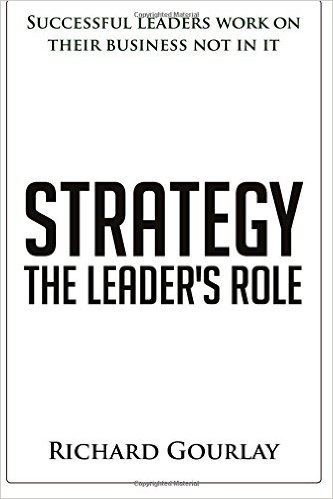
Learn more about strategy and how to build yours in your business, click here or on the book below.
Being clear and precise is vitally important in the company’s messages for a brand to succeed. A strong undiluted brand message must enthuse internally but must also consistently connect with customers through all touch points. For great examples look at Innocent, Dorset Cereals or Apple as classic examples of touch point engagement. They also demonstrate a clear story delivered with passion about who they are what they do and why they matter.
This focused and consistent message is not just a marketing message but an ingrained set of values which consumers buy into with passion. These brands not only position themselves as premium players in their fields and earn more but they also continuously find new ways to spread their key messages to customers, they have a clear brand strategy to achieve it.
Everyone Must Live The Brand
Another vital aspect of any brand success is that the people within that brand demonstrate what they preach. They live that lifestyle, support the values and aspirations associated with a brand and contribute to its success. It is their lifestyle, it is a part of the way they and their brand do business. This is something I learned at my first full time job at the then privately owned outdoor clothing brand Berghaus. Everyone lived and loved the brand.
Great brands go beyond the logo, to understand its real value to existing customers and also to tomorrow’s customers. Whether it is a family run local shop or a global supermarket chain, great brands position themselves so they develop and hold a market position to develop long-term success.
Great brands also develop their own uniqueness. Not just in the product or service but the whole package in how they do business. There needs to be not only consistency but the brand hand writing and value on how they do it. The best brands always develop singular simple signals for customers, cutting through jargon to create clarity without patronisation their audiences. That strategy creates and supports a strong company culture, which the leadership team must then sustain. Successful leadership teams revitalise that culture by refreshing their vision to focus on where they are taking their organisation.
For brands to succeed in today’s global markets then these golden rules have never been more important to businesses, as consumers have never had so much information, but if you follow these simple rules of brand success you can develop and maintain a great business.
If you want to develop your company’s brand and are looking for some advice on developing your company, its marketing, its sustainable competitive advantage then contact us at Cowden to see how we can assist you, or read more about us in this blog or at @richardgourlay or contact Richard Gourlay
Despite what marketing people passionately believe most people don’t think about brands, they just get on with their lives. The coffee they buy, the supermarket they go to and petrol station they visit happen almost by accident. In Britain today we are too busy to think through these everyday inconsequential purchases, focused on saving time, not forgetting something or rushing from place to place on a tight deadline. So what makes great brand? Lets see.
Customer Choice
Let’s start with the basics, the customer has choices, endless choices if they choose to use them. But, in many everyday cases as in my examples above, the consumer sacrifices those choices for simple expedience. The inability to see (or value) brand differentiation, between Starbucks and Costa, between Tesco and Morrisons, between BP and Shell, and yet they each fight for space in consumers minds through tiny differences which if we stop and think about do actually exist and we the consumer do actively value.
Despite what marketing people passionately believe most people don’t think about brands, they just get on with their lives. The coffee they buy, the supermarket they go to and petrol station they visit happen almost by accident. In life today we are too busy to think through these everyday inconsequential purchases, focused on saving time, not forgetting something or rushing from place to place on a tight deadline. So do brands matter and if so why and how?
Brand Perception is Everything
Consumer choice is therefore the perception of the brand we hold at the time of making that purchasing choice. It is the conscious decision consumers make based upon how they feel about the brand at the time they choose to consume that product or service. So a brand needs to be more than just an image, more than just a recognisable label and more than just a mission statement. What makes a great brand is the sustained feelings which it provides its customers. That brand presence, the perception in someone’s mind is an accumulation of all the marketing elements which are planned into the deliver of that product and service to the customer. Often just called the extended marketing mix (the 7P’s) which define the areas of proactive marketing which integrate together and support any brand from Poundland to Rolls Royce.
A brand through is also more than cold marketing elements pulled together, it is also the feeling and values which underpin any brand. A brand invests its existence through it products/services. That R&D element often defines the brand and its position. A brand that does little to know investment in its R&D is often what is called a label, a company that sites within a market sector (player) but does not drive the growth of that market. This key element of a brand creates and sustains a brands culture. Its culture and ethos coupled, codified and defined by its leadership are essential elements in creating and sustaining any brand. When you are thinking about a brand, it’s not just the branding, it is so much more and it must all start with the customer.
Business growth is not an accident. Why some businesses succeed and others do not is not by chance. Business growth requires leadership to plan out where they are going within there market. All markets change through both evolution and revolution (think of those disruptive players in any market and the impact they have). This slideshow explains why it is important for leadership to use business planning tools to effectively plan their growth. So where does tomorrow’s business growth come from?
Tomorrow’s Business Growth
In every market there is always new opportunities always arising. Markets do not go up (or down) equally. Some segments and individual customers grow faster than others due to their strategic or tactical successes. Knowing where external and or internal market factors are influencing or driving segments within any market is the vital strategic insight which leadership teams need to understand. Even markets declining do not do so at equal rates. Change happens in every market so knowing where to look for positive changes within any market is a key skill for leaders to learn.
Growth and development of every market happens at different rates, in different parts of markets around the world. Looking out and at tomorrow is a vital element for leaders to undertake as part of their role.
Leadership is About Looking for Growth
Being successful in business is all about seeing the bigger picture and understanding future growth. For a business to grow and develop, the leadership team must invest time building it. That requires the leadership to step back from the day-to-day operations of the business and focus on working on the business. Like to learn more, click the slide presentation below to learn successful leaders work on their business to find growth.
If leaders aren’t looking for growth and the development of their business within the market then they need to develop these skills for success. The slideshow below will show you more or get in touch with Cowden today to discuss your business needs today, click here.
Where does tomorrow’s growth come from byRichard GourlayLeadership must think strategically if it is to be successful in growing its business. If you want to develop your strategic thinking then why not start by reading my step-by-step guide on how to think strategically.
This website uses cookies to improve your experience. We'll assume you accept this policy as long as you are using this websiteAcceptView Policy
Cookie Consent
We use cookies to improve your experience on our site. By using our site, you consent to cookies.
ID used to identify users for 24 hours after last activity
24 hours
_gat
Used to monitor number of Google Analytics server requests when using Google Tag Manager
1 minute
__utmb
Used to distinguish new sessions and visits. This cookie is set when the GA.js javascript library is loaded and there is no existing __utmb cookie. The cookie is updated every time data is sent to the Google Analytics server.
30 minutes after last activity
__utmc
Used only with old Urchin versions of Google Analytics and not with GA.js. Was used to distinguish between new sessions and visits at the end of a session.
End of session (browser)
__utmz
Contains information about the traffic source or campaign that directed user to the website. The cookie is set when the GA.js javascript is loaded and updated when data is sent to the Google Anaytics server
6 months after last activity
__utmv
Contains custom information set by the web developer via the _setCustomVar method in Google Analytics. This cookie is updated every time new data is sent to the Google Analytics server.
2 years after last activity
__utmx
Used to determine whether a user is included in an A / B or Multivariate test.
18 months
_ga
ID used to identify users
2 years
_gali
Used by Google Analytics to determine which links on a page are being clicked
30 seconds
_gac_
Contains information related to marketing campaigns of the user. These are shared with Google AdWords / Google Ads when the Google Ads and Google Analytics accounts are linked together.
90 days
__utma
ID used to identify users and sessions
2 years after last activity
__utmt
Used to monitor number of Google Analytics server requests
10 minutes
Marketing cookies are used to follow visitors to websites. The intention is to show ads that are relevant and engaging to the individual user.
Facebook Pixel is a web analytics service that tracks and reports website traffic.