Taking strategic action to improve your business startup success

Where Does Tomorrow’s Business Growth Come From?

Business growth is not an accident. Why some businesses succeed and others do not is not by chance. Business growth requires leadership to plan out where they are going within there market.  All markets change through both evolution and revolution (think of those disruptive players in any market and the impact they have).  This slideshow explains why it is important for leadership to use business planning tools to effectively plan their growth. So where does tomorrow’s business growth come from?

Tomorrow’s Business Growth

In every market there is always new opportunities always arising. Markets do not go up (or down) equally. Some segments and individual customers grow faster than others due to their strategic or tactical successes. Knowing where external and or internal market factors are influencing or driving segments within any market is the vital strategic insight which leadership teams need to understand.  Even markets declining do not do so at equal rates. Change happens in every market so knowing where to look for positive changes within any market is a key skill for leaders to learn.

Growth and development of every market happens at different rates, in different parts of markets around the world. Looking out and at tomorrow is a vital element for leaders to undertake as part of their role.

Leadership is About Looking for Growth

Being successful in business is all about seeing the bigger picture and understanding future growth. For a business to grow and develop, the leadership team must invest time building it. That requires the leadership to step back from the day-to-day operations of the business and focus on working on the business. Like to learn more, click the slide presentation below to learn successful leaders work on their business to find growth.

If leaders aren’t looking for growth and the development of their business within the market then they need to develop these skills for success. The slideshow below will show you more or get in touch with Cowden today to discuss your business needs today, click here.

Where does tomorrow’s growth come from by Richard Gourlay Leadership must think strategically if it is to be successful in growing its business. If you want to develop your strategic thinking then why not start by reading my step-by-step guide on how to think strategically.
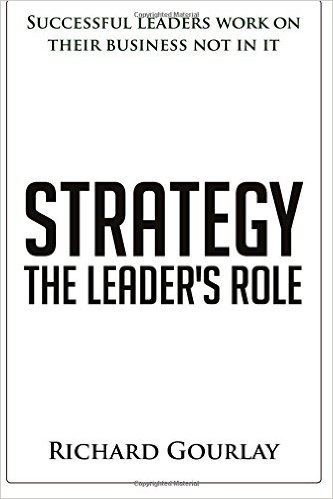
Strategy The Leader's Role by Richard Gourlay
Leadership Development by Richard Gourlay

Strategic Planning Workshop is the model for successful Business Planning

Strategic planning is the process of defining your business’s key priorities as a business. Successful business’s have clear priorities which their business as a whole unit focuses on to achieve. Each of these key priorities are defined within a business as a strategy. A strategy, a course of action which will deliver a pre-determined business goal. For leaders undertaking a Strategic Planning Workshop is the model for successful business planning, putting leaders in the driving seat of their business.

Successful business planning is about developing your strategic plan for your business based upon proven business development tools. The Strategic Planning Workshop pulls these together into a single process. This process takes the guesswork out of your business success.

Maximising Opportunity: Reducing Risk

Taking the guess work out of your business success is a step-by-step process which develops business owners skills to strategically plan their business.  Good strategic planning enables businesses to take advantage of emerging markets, emerging trends, develop and launch new products. Strategic planning also enables companies to make structurally improvements to their business to improve its profitability, reduce costs and enhance productivity.

Strategic planning workshop is a proven method of developing and implementing success see www.cowdenconsulting.com.

Strategy: Leadership Skills

Strategic planning creates a clear direction for a business take. Working on your business, not just another day in it, crating a sense of direction, for the whole team to take. Working on your business, from developing your WHY (Simon Sinek, the power of why) through to creating a strong sense of purpose and direction. Where you are going and why is a powerful outcome from a s strategic planning workshop.

Secondly for leaders the ability to discuss their personals goals and ambitions in an environment which allows open discussion and development of those linked to their business is a real focus for personal leadership skill development.

The third leadership outcome from a  strategic planning workshop is the forward plan of where the business is going. That creating of a clear focus supported by detailed action plans moves the whole team forward as one.

Strategic Planning Workshop (Slideshare about Strategic Planning Workshop)

Click the link below to begin the slideshow to learn the fundamental skills and how to undertake a strategic planning workshop.

Strategic Planning Workshop from Richard Gourlay

Strategic Planning Workshop

Like to learn more about what a strategic planning workshop delivers to business owners in creating growth, focus and direction then get in touch  and learn more. Enquries@cowdenconsulting.com or contact Cowden Strategy.
The way forward in business, clear vision and direction supported by a supportive culture and a clear business plan, by Richard Gourlay

Content Strategy: The future of marketing

In a world of continual change seeing what is happening is often difficult to understand until the paradigm shift has occurred. Many companies are struggling to stay ahead or even in the game of online marketing. Many companies are moving towards online marketing content strategy or as marketing people call it inbound marketing. This major shift in culture and one needs to be fully understood. The importance of content as a strategy is the future of marketing.

Content Matters

I have just had an old-fashioned marketing communication from a well-known brand, asking me to make an immediate purchase offering me a FREE upgrade for a new phone. My automatic response is not to be interested, at all because they have not demonstrated that they understand my specific needs. That made me thinks and write this article to explain why in today’s online world that old marketing technique is now as un-effective as a double glazing salesman offering me 50% off! 

Content Strategy: It’s a complete shift not just an add-on

In a world where everyone is online all the time, the amount of information is drowning people, from Linkedin to Facebook and Twitter the rise of smart phone connectivity has promised much change to marketing but until recently only early adopters, high value and niche players could see what it meant to the marketing process.
Like many changes, it is not until the change becomes tangible does its impact become visual to many marketing departments that enables them to successfully influence a company’s marketing policy. This is considerably harder to convey when there is no tangible evidence of marketing results attributable to hard to track invisible marketing shift. Unlike the shift to direct marketing where direct connectivity between outcome and result can be seen through a transparent return on investment, online inbound marketing is struggling to demonstrate its effectiveness.

Content Marketing: Pace of change is outstripping current understanding

Currently content marketing relies heavily upon invisible and poorly understood online activities. Simply put, the rate of change is outstripping the knowledge base of the marketing industry, creating a gap between the understandings of marketing by decision makers. The routes causes of this is that not only are customers sourcing information in newer ways but the platform they are using, the Internet indexing is also changing ever faster, Goggle will make over 600 changes to way it scores content. Rapidly changing customer preferences, coupled with changing technologies and an ever changing platform results in the lack of certainty of what is working and why. By the time you’ve worked out what works it has already changed.
Content Strategy can create confusion.   
Content strategy marketing process, one that now focuses on creating online and open platform engagement, online PULL; rather than internally controlled PUSH marketing methods, traditional marketers often struggle to understand the process let alone feel uncomfortable with the concept. This is not unreasonable, given the history of marketing in the last 50 years has always focused on the traditional pipeline of generating and then controlling customer decision-making, content marketing turns that on its head. People investing in inbound marketing are asked to spend money on losing control of the potential customer by letting them make an open decision about how and when they engage with your brand.
In the mid 1990’s I remember designing a website to support a brand. No one was interested until it was live and people could see something online. A director then said, “That’s great let’s print it off and send it to all our customers”    

Dialogue NOT monologue

The inbound marketing process is about generating an open dialogue, rather than a structured marketing process. It lets potentials, prospects and suspects move in and out of your control while they select you, rather than being controlled by you.
The Content Strategy Process
  1. Listening – Online is now the first port of call for 78% of web users.
  2. Creating – Great content that answers need and demonstrates expertise.
  3. Engaging – Is about being talked about and developing a dialogue with audiences
  4. Transforming – Is about continual engagement, moving them from suspects to purchasers
  5. Growing – Requires creating perpetual momentum developing new and developing loyalty
Traditional marketing models of developing engagement such as AIDA are still highly valid but instead of just focusing on a immediate winning proposition through a grabbing hook, attach a liner and sink them in a simple linear model for winning customers. Content strategy marketing demands  multiple engagement tools which include cross referencing other parties creating competitive collaborative working to generate awareness, giving away FREE content in white papers coupled with fast and slow acquisition tools in decision making.
Content strategy needs to be explained better
Moving to a content strategy is about moving from PUSH to PULL, not about the Internet platform, it is about understanding the importance of open unrestricted dialogue rather than material generation and in reality it is not just about the Internet although this is where its impact is being seen today, but equally will encompass every marketing platform and process. The growth of mobile technology will further the pace and realisation of content strategy.
Like to know how we can help you, then get in touch, just click this link
Vision to make change n business by Richard Gourlay

A good business has clear objectives and goals to achieve.

For leadership teams planning a business is focused around the annual exercise of business planning.  Reviewing what went well and what did not, reviewing the overall performance of the organisation, its profits (or losses) and deciding what to do differently and what to keep the same for the forthcoming year. That’s why a good business has clear objectives and goals to achieve.
One key area which good leadership teams consistently get right is in rolling out the right measures, both soft and hard measures of performance inside a business plan. Cascading business plan objectives down to department and down to personal performance objectives are the vital element in implementing a business plan successfully. The key ones include refreshing the vision and connecting clear objectives and soft and hard metrics together to all levels of the organisation.

Business Goals

Having a vision is vital to be successful in the long term, but having objectives will ensure you get you there. Clear milestones for everyone inside your company, top to bottom are the essential component of a successful company. Every successful company has clear goals, strategic ones the outrageous ones (global domination) through to achievable tactical objectives.

Without clear (SMART, see below) objectives a company will loose focus on its goals. Poor or non-specific objectives companies can fall victim to strategic drift, this month’s whim and next month’s quick idea.  The failure to cascaded objectives at every level allows good people’s morale and confidence to fall. This is because they cannot see where how they are contributing to the company’s success. Everyone should know how they contribute to the business plan’s success. Failing to set clear objectives in a business plan creates a path to failure in execution and devalues the process of business planning and it becomes a waste of paper, time and effort.

Business Objectives

Objectives should be like a pyramid, with the big objectives at the top, but at every layer underneath there should be the sub objectives that make the bigger one happen. A well run organisation should therefore look like a pyramid, in terms of objectives, with everyone working on their goals which build up together to achieve the big picture goals. This form of management managing by objectives MBO, (not to be confused with a management buy-out MBO), allows people to focus on their objectives, which are aligned to higher goals.
Try not to have too many objectives to achieve. I always recommend no more than 5 per person. The reason why 5? Because it keeps people focused and not drowned in statistics. Even at the company level remember the old KISS concept of simplicity, if you have page after page of objectives some will suffer unless you can resource them. Focus on what really matters to the business, what drives performance and how are they made up. For people think about their Key Performance Indicators, KPI’s they are doing a good job if… Classical KPI’s usually include: revenue, margin, customer numbers, retention, growth, production, saving, are amongst the most common.

Setting Business Objectives

High performance companies often drive all their goals by setting team objectives which are then broken down into Key Performance Indicators (KPIs) for each individual employee. Try not to give any individual or manager too many. An easy way to achieve that is to ensure they can remember and recall them with ease when you meet them.

The benefits of setting good objectives:

1.       Objectives define the entire purpose of your business (or unit) in a couple of sentences or bullet points or set of numbers.
2.       Objectives are often identified as key performance indicators at the individual persons performance.
3.       The objectives that you set determine the quality of the strategy or tactics that you will adopt.
4.       Goals allow leaders to Manage By Objectives MBO. This avoids time in argument and also helps in introducing a more participative management culture where employees are encouraged to set their own objectives.
5.       Clear KPI’s per person is a successful way to evaluate performance as long as the KPI’s are numerate or translatable into a numerate language.
Remember SMART criteria to define attributes of good objectives:
That is:
·         Specific
·         Measurable
·         Achievable
·         Realistic
·         Timely

Achievable Goals

If goals and objectives are not SMART then they are unlikely to be achievable.  Being better or good for example is too often quoted as a goal or objective, and while that is a statement of direction it is not a clear viable goal or objective. SMART goals and objectives are tangible they are a defined quantifiable number or a supported qualitative measure compared to an existing one.
Goals must be achievable. But for that to happen they must be quantifiable, either numerate or benchmarked compared to a previous number and deliverable within the timeframe to the standard required.

SMART criteria include:
1.       Both short range and long range targets should be set.
2.       Both quantitative and qualitative
3.       Clear. Put them in writing, to be achieved within a specified time frame.
4.       Measurable. So that they can be compared with actual results.
5.       Challenging. This is so that staff will put greater effort and be more motivated.
6.       Achievable. Avoid overly optimistic goals as this might be counter productive due to their demotivating nature.
Goals should be realistic, reasonable, reachable and beatable. Avoid hidden goals and don’t be over specific.
Hope that gets you thinking? Want to learn more then contact us or click here