Growth planning in business

Turnaround Your Business: The Garden Rooms Case Study

Case Study a Garden Rooms business in Scotland

Turnaround Your Business with Richard Gourlay

A Garden Room

Turnaround Your Business

The owner of a Garden Rooms business in Scotland approached me to turnaround his business. Operating in a potentially growing market designing home garden rooms, such as offices, bedrooms and gyms while also still building home extensions. He was struggling to run these businesses, spending most time running around firefighting and dealing with unhappy customers. To turnaround your business often external advice and active support is essential, here’s why.

The Situation

The owner was trying to run too much at the same time, which put him under: –

  • Financial pressures: no real financial model and limited systems in place. With little cost management or operating and margins in place, putting continual pressure of the business’s finances and margin impacts. 
  • Operational issues: with no operating systems in place each project ran differently, which lead to a wide range of quality and complaint issues, including legal disputes.
  • Quality issues: with staff firefighting onsite with suppliers to get components to site on time, impacting upon delivery times, production and cost and quality impacts.
  • People issues: of unhappy and unmotivated staff, no one really knowing what they were being asked to do and good staff leaving. 
  • Ultimately there was little customer focus and significant firefighting, unfinished jobs with a long list of snagging issues to be resolved.

Our Solution

Working with the key people we developed a clear business strategy and culture shift for the business, identifying the businesses core value proposition and a customer focused ethos.

This led to a complete process of change and focused team actions to re-invent the business around its core value proposition and improvement plans to redesign out all root cause issues within the business. 

Following this process we then developed a customer process map.  This identified every customer value added step and supported the customer through the entire process. With a new marketing strategy also in place we were able to improve: –

  • Customer engagement and acquisition which led to an improved Average Order Value (AOV) of 55% in one year.
  • Ownership of issues by frontline staff to get it right for the customer, reducing snagging and issues to a controlled minimum, with everyone pulling together.
  • The development of product improvement and a full product range to support customer retention and conversion, making the business the dominant player within the target market.

This Enabled

We worked with the owner developing his business and his skills to lead his business more successfully, providing support and guidance throughout. This was supported by clear business planning with the owner with a full strategic and operational business plan in place. 

  • Clear success goals shared with the team. 
  • A forward annual business plan covering every aspect of the business. 
  • Sales goal setting which supported and underpinned the financial plan.
  • A comprehensive financial and cashflow model to ensure the business is cash positive and profitable for the first time.
  • The owner was able to positively look at a trade exit strategy from this business. 

Turnaround Your Business

Revitalising, recreating or jest evolving your business is an essential requirement to become and keep being competitive within your market. Don’t wait until it is too late. The earlier a business leader identifies they could benefit from a strategic refresh the more options and quicker positive change can happen. To turnaround your business with Richard Gourlay then lets have a chat with Richard here now.

Director Mentoring 6 Great Reasons to Be Mentored by Richard Gourlay

Richard Gourlay Director Mentoring

Being focused and clear on where you are going is vital as a director. Clarity of direction with a clear focus with your business puts leaders in control of their business.  Being in control ultimately ensures leaders are successful. But taking control is one of the biggest issues leaders face. Knowing where to start, and even how to start making positive changes to your business can be a real challenge.

Leaders Mentoring Needs

Successful directors must be able to create and make change happen. Making change is essential to make their company able to meet demands and expectations of its customers. So leaders must become change makers within their organisation to make it and keep it successful. Knowing how and when to make what changes is the many skills which leaders need to develop.  Being able to see the need, communicate it and deliver change is a major skillset senior people need to develop.  Leaders have to be able to move outside their existing comfort zone in taking people through change..  

Successful change makes a real bottom-line difference to your business success. But to go through change is often painful and difficult. This is where an experienced mentor makes a real difference.

A good mentor is someone who has not only been through change several times, but someone who also has seen it across multiple markets and with different types of people. A good mentor gets to know you as a person and gets to understand the real challenges the mentees are facing.  That’s why leaders find mentors who support them achieve their goals.  Richard Gourlay has been mentoring leaders for over thirty years. 


The difference between Telling Mentoring and Coaching

Mentoring is the process which supports leaders develop their skills by working with them in developing the mentees skills. Mentoring is a specific set of development skills where a mentor shares their knowledge, skills and/or experience, to help another to develop and grow. 

To see how mentoring sits between telling and coaching, see the graphic below. Mentoring is more effective than telling as it enables leaders to develop their skills through their real-life experiences. By talking through situations leaders learn and develop their skills, rather than being told what to do. Coaching on the other hand walks people through situations and provides guidance on specific issues. The greta advantage of mentoring is therefore that the mentee learns how to deal with business challenges  rather than being coached through situations. Why mentoring works for leaders by Richard GourlayAbout Richard Gourlay Mentor

Over the last 30 years I’ve worked with hundreds of business owners. Working with micro-businesses through to international PLC’s and I’ve identified that there are some key common factors that successful leaders do which ensure their success, while other business owners struggle to keep their heads above water. What I’ve learnt is that there are simple and logical steps that successful people undertake. These steps which make that something different in what they do delivers real results in taking the guess work out of their business success. This is the basis of effective mentoring. 

I’ve spent years refining those key steps into a programmes of business mentoring for senior people. My mentoring programmes  support personal growth. Mentoring creates bite-size action planning that develop people in their role. My director mentoring programmes enable people to develop their personal and professional skills. We develop key outcomes into sessions which develop a clear programme of development. Each programme starts by identifying mentees core strengths and areas to work on. This is then developed into a bespoke plan of what they need to do differently to be even more successful in their role. 

My Director mentoring programme

Taking the guesswork out our business success requires people making simple steps over time.  Mentoring support is usually a monthly process of development.  Each step is small and measured, typically spread over a monthly. People are held to account to make the change they want to see. By making each step happen leaders grow themselves and their team as their confidence and competence grows. Our bespoke programmes enable business owners to work ON their business effectively rather than just spending more time IN their business.

Below are some of the key things to consider in taking the guess work out of your business success:-

1. Mentoring: Know What to Work ON

Knowing what you need to focus on makes a huge difference in where to invest your energy and resources. I’m a huge fan of the leadership culture of working ON it not IN it.  If you are not working ON your business then how is it going to improve?  It is the leader who must make the business stronger.

How will you, or your business be ready and able to face tomorrow’s challenges without making change happen?  But you need to know what is important to work on within your business, and why!   That’s where mentoring supports you grown and develop as a leader. 

2. Directors: Why you are working ON your business

The only certainty in business is Change. Today that has never been truer. The pace of change in every market has, is, and will change at an ever faster rate. Changing market conditions, to customer demands, through to employee expectations have all created additional extra pressures on leaders to respond quicker. Accelerated changes within the business environment require leaders to adapt quicker and more effectively.

How should you respond to those changes?  Fast enough and effectively enough to take full advantage of those changes, without loosing site of where you are going and why. If making change is a challenge or if you have ever wondered how to make positive changes, then my mentoring programme will enable you to understand why and how to make change happen. Working on your business is the most valuable actively any leader can undertake and  puts you in the driving seat of your business.

3. Director Mentoring: Where to Grow

Every business owner wants to grow turnover, profitability or customer base, but how is the important question. Where is tomorrow’s growth coming from and how can you access it effectively and efficiently? This step-by-step mentoring programme will show you where growth is going to come from and how you can effectively access it.

What is good profitable growth rather than just growth. An important distinction which leaders need to recognise that all growth is not good.

4. How to Make Change Happen

Doing what we’ve always done is the natural default behaviour that people fall back into despite best intentions. Change does not happen unless you make change happen. Mentoring, working with an external advisor is an effective way to develop yourself offline from your existing line management structure. Being able to discuss personal skills development with an external mentor allows people a “safe space” to bounce ideas around, share frustrations and concerns enables people to think through making change happen.  

Change is always easy to talk about, but harder to actually deliver. Change is always necessary to achieve success. This step-by-step mentoring programme enables you to create the right changes, which deliver the right results for success. Every step involves a single simple activity which is supported by a template in a workbook to create your success.


5. Director mentoring Reduce the Risks

Taking your business from where it is today to where you want it to be tomorrow is essential to keep your business competitive and successful. But change involves taking risk, but there is an even bigger risk in not making change. Director mentoring programmes reduce these risks by evaluating and balancing the risk factors effectively.  Each step is focused around making sensible pro-active decisions which have been tried and tested.   

Being mentored by an experienced independent director allows you to talk through ideas and thoughts with a neutral advisor . An experienced mentor provides a sounding board for director decision making and will challenge your assumptions prior to you making a decision. This reduces risk and allows a director to talk through scenarios and likely consequences. This puts risk reduction and mitigation in place to manage and overcome those risks.  Being mentored therefore provides confidence and certainty in decision-making. 

Richard Gourlay is an approved MentorsMe mentor, click link to see Richard Gourlay MentorsMe 


6. Director Mentoring Effective Way to Grow 

Taking the risk out of your business success is all about taking small, simple but highly effective steps. Steps, sometimes small, but always forward move the business in the direction you want it to go.  I have designed personalised mentoring programmes to fit every type of person and business by size and sector and at every stage of its development.

Short bite size learning, on face to face or remote sessions support leaders lead successfully. I design a mentoring format with clear models (including  templates) suitable to each leaders specific needs. I then bespoke design it to enable you to achieve your success. Supporting your personalised mentoring programme are emails to help support you undertake each step and keep you on track. 

So if you want to take the guesswork out of your business success? Then this effective mentoring programme is specifically designed for business owners from start-ups to established businesses owners to take the guess work out of your business success.  Our mentoring programmes are a combination of online and face-2-face, depending upon your needs and location.

So get started today, make the first step and contact Richard Gourlay today to start your mentoring journey, just fill in the form below. 

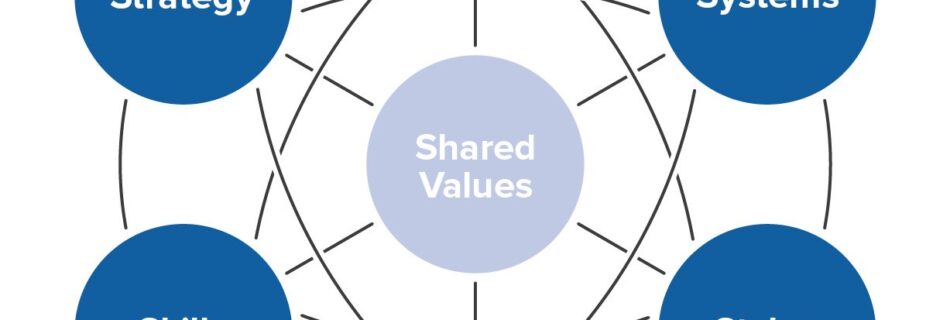
McKinsey7-S-Model to assess a company structure, by Richard Gourlay

The TOP TWELVE Business Planning Mistakes

Business planning is often talked about as a challenging process to go through.  Both to start a new business, or as the essential process of taking ownership of an existing business. Many business plans fail to achieve their objective, not because they represent a bad idea but because they fall into classic business planning pitfalls or fall over blinding obvious credibility cliffs. Here are the top 12 business planning mistakes, and importantly how to avoid them.
 

The business-planning process is in itself a very worthwhile pursuit, they take a lot of effort and resource. A business plan’s primary purpose is to convey an idea with a view to achieving a specific goal, most typically in securing funding. 

What makes a good business plan is less clearly defined.

Always remember that a business plan needs to be tailored to its target audience. If you have different audiences you will need to be able to flex your plan to that audiences specific needs. That means shaping it, edit it and amending it to achieve your objective.

Management consultancy by Richard Gourlay in Dumfries & Galloway
 
If you would like to know how to avoid these top twelve pitfalls and credibility cliff edges then click on the subject titles which are links at any time to see my step-by-step videos on how to avoid these pitfalls and credibility cliff edges.
 
Here’s the top twelve business planning mistakes I come across most frequently:-
 

1. Lack of Viable Opportunity

Every business plan needs to describe the opportunity in detail. It must also detail how that opportunity can, and will by this plan, be exploited profitably, effectively and successfully.  A good business plan can visualise the opportunity and articulate the company’s ability to reach a viable opportunity, this is a credibility cliff.
 
Tomorrow is a difficult place to plan for, but being able to identify and make that opportunity viable is the most critical test any business plan has. It is also the most common reason they fail. Your executive summary and the wider plan describes the viability of the opportunity in terms such as:-
 
  1. What is the problem which people  will pay to have solved?
  2. Does your solution solve this issue for a specific target market?
  3. Why would someone buy your solution over someone else’s?
  4. Why are the benefits of your offering so compelling?
  5. Can you reach that target market with a compelling message quickly and directly?
 

2. Unbelievable / Unsupported Financial Numbers 

Where any assessment of a business starts and often finishes is at the numbers, specifically on the projected Income Statement or Profit & Loss. Projections are just that, but they are vital and must be based upon clearly stated assumptions. Many business plans are written with numbers which just do not stand up even to a first glance.
 
Dream numbers: in overestimating income and understating costs.
 
Your numbers have to make sense and be realistic, if you are a new start-up then they must grow rationally from nothing, but costs will be incurred before turnover is generated, these need to be realised and recognised in your financials.
 
 The financials must also make sense and be presented in a format which presents a clear case for the investment and the return you will deliver. Ultimately, they need to be credible, defensible and consistent.
 

3. No Accessible Route(s) to Market

 All opportunities are only prospective ones without evidence that the target market can be accessed profitably, this is a big cliff to fall over. 

Entrepreneurs are inherently product focused, concentrating their energies on ‘the winning idea’ to the exclusion of many other important elements such as how they intend to access their customer base, a classic cliff edge for any plan.
 
“Built and they will come” is a great dream but a poor plan.
 
A business plan must include a comprehensive, credible and costed analysis of how the company is going to access their target market in a cost effective manner. Too many plans focus on the product not the market opportunity, they focus on teh solution not the problem they are solving.
 
For that to happen your plan needs to really understand the target customers, their needs, and purchasing priorities. Turning historical data into information and drawing knowledge from it ascertain insight into their future purchasing habits. Only then can you demonstrate cost effective routes to market within a business plan.


 4. Executive Summaries Which Aren’t

Somewhere between a pitfall and a cliff edge, is the failure of the Executive Summary, to be either a summary or aimed at executives. The only part of any plan that will certainly be read is the Executive Summary and yet they rarely provide an effective summary of the business plan. A good plan highlights the key proposition of the plan and sells the proposal.
Too many Executive Summaries either throw everything down in a jumbled mess, making them pages long and randomly pulling facts together, or they are so bland they say nothing!What’s a good Executive Summary, one that states the proposition clearly and succinctly, a page is sufficient for any plan.
The Executive Summary should clearly explain the whole picture including what investment is required and what it will deliver. The point of an Executive Summary is to inform the executives, so many it punchy, outcome focused and only ever write it at the end.

5. Over Estimating Turnover  

Another associated key element of the plan which relates to this element is the estimations of projected turnover.
 
While every business plan talks in positive terms (hopefully).  The obvious and persistent danger is that the innate optimism of all entrepreneurs and their tendency to exaggerate every business opportunity. If you have no established routes to market then you need to identify the start-up period within your turnover and cost model. This has major implications for cashflow and on where investment will be needed.  Experienced investors will expect that you have taken into account. 
 
This pitfall is most easily managed using a realistic method for estimating income is to calculate the number of customers the business intends to capture and the average revenues. These two averaged inputs are easier to calculate and also to justify within a business plan.
 

6. Absence of Clear Objectives 

I could have put this pitfall at number one very easily. What is the main purpose of the plan? 

If the plan’s objective is to seek funding then it is vitally important to clearly describe the investment opportunity. While the plan describes the concept in detail, it must also address the primary purpose of the plan. So many plans fail to make it explicitly clear what the company’s needs to be successful or what the investment will mean to the company.
 
A good business plan answers the following key business planning questions:
  1. Why investors should investing in this business rather than anywhere else?
  2. When will they recoup their initial investment and how and when it can be realised?
  3. What is their expected return on investment?
  4. How the company has managed all aspects of risk? 
  5. Is the investment merely cash or do they need to bring other assets such as expertise to the table?
If you can answer these key questions, the intended audience will feel comfortable and be able to recognise that they fit the brief.


7. Non-Existent Cashflow Management

Particularly relevant to a new business, this is often an invisible cliff edge which business plans fall over on, is the ability of the business to articulate the differences between cash and profit. Running out of cash is the highest risk any new business or re-engineered business faces.
 
Good, positive, and conservative cash flow management is vital when businesses pursue investment opportunities where there are significant cash flows out, in advance of the cash flows coming in. This is the classic business plan cliff, which sends potential investors running.
 
If a business plan’s financial model is based upon selling on credit, then they receive the cash in the future, but need cask to pay expenses before that income hits their account, then they have a cashflow risk. This outflow of cash is the single biggest reason companies fail, its not margin, its rarely the product, it is invariably that they run out of cash.


8. Non existent Management Teams

Throwing a few CV’s into a business plan does not create a delivery team. Likewise a generic organisational chart with missing pieces and To Be Confirmed (TBC) is not going to inspire confidence  with investors to part with their cash.

Entrepreneurs can often sell an idea but they do not always inspire they can select a balanced team of people with the right skill mix, from the financial management to key leadership roles and the right operational team to deliver your ambitious plan.

Having a structured management team with operational structures is essential for success. Track records matter, as much as having clear roles and responsibilities laid out in delivering the operational plan which underpins the business plan.

9. Poor Evidence of Demand

A significant area of concern when planning is justifying the sales forecast or demand levels for a product or service. This breaks down into the two main elements used in forecasting: the use of historical facts and the dependency of subjective assessment.
 
Sales forecasting, is the vital tool to identify the basis of all projected revenue figures that can be considered credible in the wider context of the plan. Unless there is verifiable demand for the idea, the risks grow out of all proportion, particularly if the initial start-up or investment costs are high.
  
Minimising risk in a business plan is all about gaining an understanding the potential demand and how the company will with this plan create or drive that demand rather than concentrate on ‘the product or the idea’. This classic cliff edge is a silent killer for investors, they don’t believe in it.
 

10. Gaping Inconsistencies

An effective business plan needs to be consistent throughout as all the various strands are brought together into one single entity, the plan. It is pitfall which entrepreneurs gloss over, but investors relentlessly prod before committing to any plan.
 
If there are multiple authors of the plan the risks of inconsistencies will exponentially increase. Extrapolating data can also cause problems, using research data and then jumping from possible market size to sales potential and then sales forecast are classic pitfalls which need to be thought through.
 
Presenters of the plan must have a simple narrative that runs through their plan, using key facts and staying ‘on script’ so as to ensure that a cohesive story is communicated. The numbers must also be consistent with the broader content so that there are no contradictions between them.


11. Not Appreciating the Competition 

There is always competition. Yet the number of times the phrase “there are  no competitors” appears in plans is considerable.
 
It does not matter how unique the proposition is there will also be some other business competing for people’s money. While there may not be a direct competitor it will certainly be a transfer investment that customers will be making. The business plan must recognise where the customers invest is coming from. If competitors are not identified in a business plan then the only credible assessment is that the company has not been diligent enough in its research.
 
Also remember that no company lives in a vacuum, as soon as you launch (or before) the marketplace will change. What will the competitive landscape look like in a few days, weeks, months or years?  Can you create or establish significant barriers to entry for likely competition.  Otherwise it is likely that a successful market entry will be followed by better-placed competitors with greater resources, etc
 

12. Throwing Your Plan Out Too Soon

You never get a second chance to make a great first impression.Your plan needs to be right the first time and the content needs to be accurate, clear, concise and correct.
 
More often than not business plans need to be completed by a certain date and hence the final stages can be rushed, a classic pitfall.
 
Consequently, in many instances the final output does not do justice to the plan. Attention to detail at the end is vital, so ensure you have a completed plan with references and formatted correctly. Also ensure the content of the plan has been edited down to a digestible size, use appendices for details.
 
Get someone removed from the process to proof the plan. If a presentation is part of the process, it should reflect the Executive Summary.


In Summary The Top 12 Business Planning Mistakes are caused by:-

Business plans by definition have a purpose of communicating a course of action so make sure they do that primary role. Support inevitably means resources with the primary aim of the plan often being to secure financial investment. Explain what the investment will be used for and how it will be protected from these classic pitfalls.
 
Writing a successful business plan is all about preparation, about being as thorough in your research and planning as is possible. By avoiding the cliff edges and pitfalls above, the chances of the plan objectives being met increase substantially.
 
If you would like to know how to avoid these classic business planning pitfalls then why not click through to my step-by-step video: How To Take The Guess Work Out of Your Business Success, click here. Or read more about strategic planning and business planning in my blog, click here.