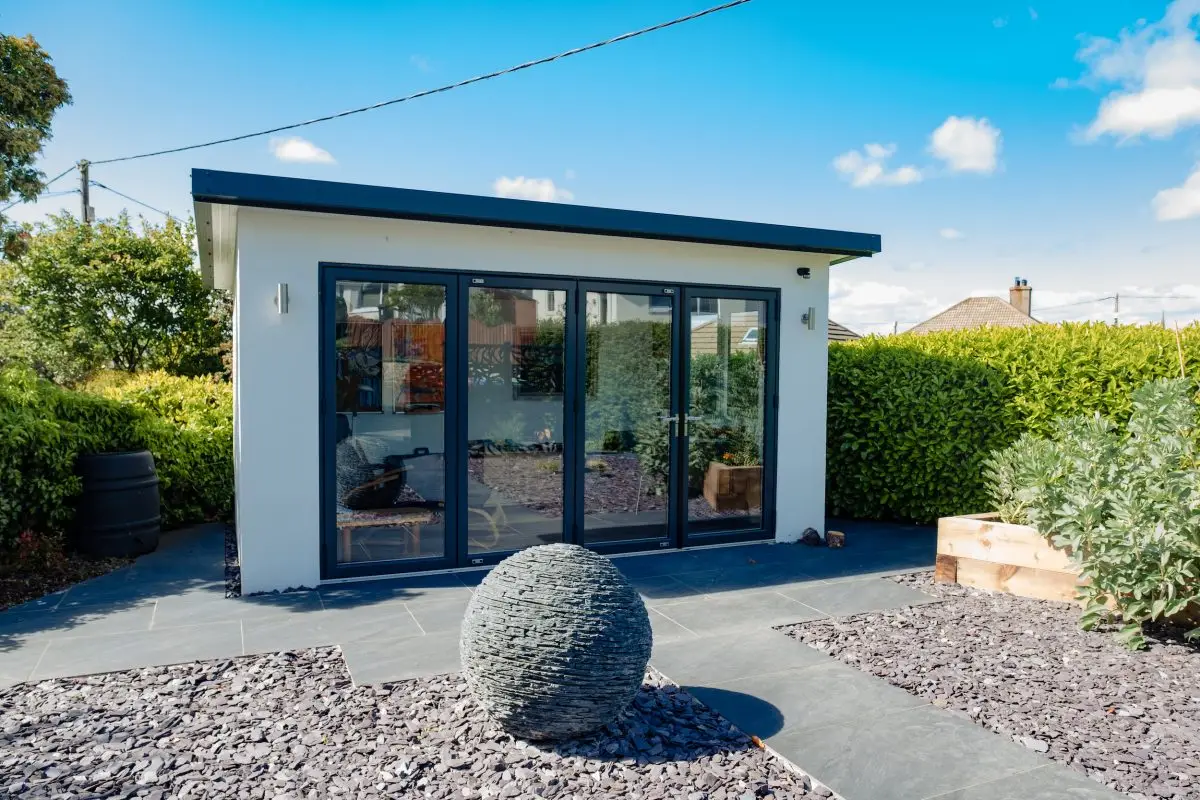
Business success supported by Richard Gourlay at Cowden

The Growth of the Garden Rooms Scotland Business

The Growth of Garden Rooms Scotland


The Growth of Garden Rooms

2022 was a great year for Garden Rooms Scotland. A Dumfries success story, with business doubling over 2021 as more and more people look to add a garden room to their home.  The success in 2022 was not a one off, the confirmed order book in January for 2023 alone is more than the turnover achieved in 2021. 


That success is not just down to a great front of house team’s solution design mentality, or the construction team’s hard work in quality construction. Garden Rooms Scotland provides a whole business solution. So where is the growth for Garden Rooms coming from?     


The growth comes not from just a great company but also from several major factors within a market. The growth for Garden Rooms Scotland is no different.  For many established companies’ growth within the outdoor living space sector is significant and is here to stay. Well, at least for the next five years or so if all market projections are to be believed. Why garden rooms are growing, is not down to just one factor, but many inter-related factors which is why growth is not just a blip but a long-term trend for companies set up to maximise this growth market. In response Garden Rooms has built a business to meet that growth curve. 


Rising Demand for Garden Rooms


By far the biggest driver for people buying a garden room is in response to the demand for dedicated work from home space. While 2020 may have been the year of remote working due to Covid, it was just the icing on the cake in growth for the garden room market as work from home became the new normal.

Demand for garden buildings went up by 500% between January and May 2021 at the height of the Pandemic. But it was not a Covid blip, but an emerging long-term trend. A recent TUC survey discovered that more than 38% of people in 2022 in the UK now work from home at least one day a week. By 2025, it is estimated that 70% of the workforce will be working remotely at least five days a month.

The work from home garden office, provides a separate “workplace” replacing the kitchen table worktop. It not only enables people who want to their Zoom conference call in private, but want a permanent workspace differing from their home life. 

Modern buildings provide a series of tangible benefits over old refurbishments. From WIFI, heating and cooling, well insulated and functional design the space works for business people. Garden Rooms also provide a steppingstone to work but without the costly time and financial commute for many professional workers.  Garden Room offices also provide a tranquil workspace, looking out at your garden, creating calm and relaxed workspace, within a few steps of your home.


Space to Add a Garden Room

In places like Dumfries and Galloway, Cumbria, and Northumberland there is also space around many homes. Not just in rural housing but also in towns where many homes until recently were built with sizable gardens and surrounding spaces. This creates options for owners to utilise their spare space for an additional living or work from home space, either as accommodation or for a dedicated activity, from yoga space, music room to art studio. 


Diverse Outdoor Living

Another major factor for many people choosing to add an additional living space is that it adapts what people have saving them having to move to find extra space. “If only we had a …….” Is solved by installing a garden room. Just the cost of moving home is often as much as adding in a new room to an existing property.  Creating a new modern living space within an existing home is also easier as recent planning restrictions have been amended to favour garden room addition.  

Creating dedicated spaces within a garden also creates privacy and can bring a function to a garden as well as a focal point to a garden. Creating a separate functional space brings structure to a garden, adding new functionality to the entire living space without disturbing the existing home. 


Cost Effective Extensions

Starting with the cost of renovation, which has risen our of all expectations, due to labour and materials, with materials alone having risen over 40% since 2020. This makes adapting an existing house now significantly more expensive than adding a garden room option. A comparable construction cost comparison makes an equivalent extension typically 25% more expensive than installing a garden room. 

Coupled to that many older buildings have significant limitations in adaption. Think of old houses with thick load bearing walls, and limited internal room sizes and the attraction of a bespoke design with modern spacious living spaces, well insulated and quickly erected and the rationale for a garden room becomes self-evident.  

Garden Rooms Solution

Designed and built in Dumfries at their dedicated joinery shop, Garden Rooms are designed to be built as modular units which are then constructed onsite.  Bespoke design with innovative solutions Garden Rooms solves people’s living space challenges.  Using clever solution such as ground screw foundations and modular construction saves time and money for customers. This makes the time on site shorter and with low impact on existing gardens and customer’s lives. 

With two showrooms providing a huge range of garden room solutions, customers can visualise and select the size and features they value most in their new garden room. For 2023 Garden Rooms has added new products and features to extend the range and scale of what can be offered.  Garden Rooms is a business going the right direction in the right market at the right time.

To learn about how Richard Gourlay supports and develops successful businesses then contact him by clicking here

values in business matter to customers and employees

Values matter in BUSINESS more than ever before as Ikea have just found out

In today’s information driven world, how you do business matters as much as the business you do, as Ikea the iconic Swedish furniture retailer, has just found out. Ikea’s green credentials have been dealt a massive blow in consumer’s minds. Ikea’s failure to support sustainability in its products leaves customers questioning its real values as a business. Heres, why values matter in BUSINESS more than ever before as Ikea have just found out to their cost!  Here’s why you cannot just talk about values, you must live them! 


Ikea only uses 16% sustainable wood! 


Ikea’s failure to achieve its own most modest target of 30% of its wood products to be from certified sustainable wood, will damage it its credibility heavily with its key audiences. The fact that it only hit 16%, has a massive blow on the values it professes as promoting sustainably sourced materials and to its environmental positioning.  Compare that with Homebase (78%) and B&Q (77%), which won the best green award 2010.


The excuse given in its defensive press statement is that it has sacrificed the values of sustainability for rapid growth and protecting its profitability (£2.3billion). But short term greed like this can cost dearly on both growth and profitability over the long term.


Ikea’s staff not telling the truth 


This corporate failure was made worse by staff telling customers in store that its products are from sustainable sources. When in fact they are from illegal logging in places such as Russia. This insatiable drive for growth, which so often undermines trusted names, may damage the Swedish brand’s position as the leader in the flat pack market significantly.  This expose means that Ikea will now undergo microscopic environmental and customer scrutiny.


Greenwash Marketing is NOT acceptable


Ikea’s soft “long term” aspirational statements on their website with links to the Rainforest Alliance are unlikely to be seen as enough in the modern world where green wash marketing such as this are quickly exposed and penalised. When the spotlight of the green world is turned on, it is difficult to hide in the shade.


The World Bank suddenly in the late 1980’s promoted its ‘green credentials’ by promoting itself as having employed ‘an environmentalist’, to offset its image of chopping down forests for cash crops.  This green wash story was quickly exposed when it was pointed out the World Bank employed some 5,000 economists, what difference would/could one environmentalist make?


Values matter in business by Richard Gourlay


Business Values must be transparent


The way you provide your product or service and to whom, says more about you than how much business you do. Being a big turnover company in a highly segmented world is no longer the determinator of success.  How you do your business now determines your current credibility and future success.  Credibility is as much about your values in becoming successful as about the success you have.  The question of size as measured by turnover raises questions about how you do business.


Real Business Values Recognise Real Carbon Footprints


Too often businesses have slick marketing messages, from slogans and statements, rather than understanding what impact they are making on the world in everything they do, their carbon footprint. As Carbon footprint becomes clearer so businesses must adapt to reducing it throughout their entire impact upon the planet and reflecting that in the values they actually demonstrate.


Your values as an organisation as demonstrated by everyone inside your organisation matter to both existing and potential customers in choosing to do business with you. People have choices and they can now exercise them more freely than ever before, and that means customers can access information instantly to make choices that are more informed. Ikea’s staff misinforming undercover Times reporters about their sustainable and certified sourced products at a number of shops are one symptom of Ikea’s rapid growth boardroom culture.


Vision Mission and Values in business Strategic Planning Workshop by Richard Gourlay


Values Must Live In The Moment 


Almost everything in life is in real time and instantly communicated to circles of influence and beyond. A restaurant having  bad night can have a poor reputation before the starter has even been cleared away as customers post live feed back to sites such as Qype or Trip Advisor . Therefore, before the waiter, maitre d’ or chef knows what’s happening the world outside already does by Twitter and Facebook and are cancelling their reservations in their droves.


Why clean lavatories matter?


The old adage that if you want to know how clean the restaurant kitchen is, inspect the lavatories. This is because they tell you how the restaurant values cleanliness, is a great example of modern customer awareness. Do you live your values or just post them on your website? Is the question customers want to know in establishing and experiencing trust with you and your brand.


You can spend as much as you like on your website, Google reviews and trip Advisor comments, but simple first impressions such as the state of lavatories matter more to customers.


Rail companies are learning fast


The recent story of the man on the train talking too loudly causing enraged customers to Tweet  complaints about his behaviour which was picked up by a duty manager hundreds of miles away who then contacted staff on the train to track down the loud caller and asked him to quieten down.


This story is very much testimony to the growing demands of customer expectations, immediate online response, not waiting for passing train staff to react. This story is part of the reputation shift that train companies are actively pursuing.


Values are in the detail


Values matter, they define the real differences between companies. How British Airways treats its customers through the values it embeds in its entire organisation is what makes it different to other premium airlines and distinguishes it from them, and from the bucket providers such as Ryanair.


However, as everyone de-layers in response to changing business models, cost and modernisation requirements, values can be lost in the rush to modernise and compete in new ways. BA’s changes to its premium dinner menu, introducing exotic main courses such as crocodile and ostrich sounded good but simultaneously cutting the After Eights, so there was not to go around 1st class passengers was a classic example of getting its values wrong in its customer’s eyes.


Values Must Involve Everyone in the organisation


If you value your customers then remember everyone needs to smile in their role, if you believe in providing excellent customer service then don’t cut your front of house staff numbers.


Too many companies’ ideas of communicating values are to place a statement on a website, brochure, at reception and on the induction training programme. How many companies look at the strategic advantage of values and embed it into people’s roles, asking staff to define their role by those values by redefining their role to live those values?  How many companies review those values as outcomes in winning and retaining customers?


Business Values as seen by Employees and Customers


Customers, potential and existing, are drowning in choice.  What makes you stand out to them is the values you own and can demonstrate as a business. Statements on walls and websites always sound good, (possibly, because they are written by marketing people who do not work there) but unless the company lives them, then they do more damage than good. Over promising and under delivering is a growing experience for everyone today.


Whether it is a London hotel, stating it’s exclusiveness, as evidenced by its 5 star, pretty pictures on the website of its presidential suite and over the top statements such as “sumptuous 5 star accommodation” the jaw dropping price tag. When you turn up and find a broom cupboard with not enough space to turn around in let alone swing a cat, and you are one of 500+ rooms filled with bus loads of tourist on a package holiday then company values are under pressure.


The same is equally true for staff. Why should people stay loyal to you if you don’t live those values and enshrine them in every one of your people. Do they live it or lip service it?


New company’s leadership must create and live their true values 


New companies have the unbridled opportunity to define their values from the start. By building them into their business model throughout the entire process from the beginning, providing value and clarity with every new role and new person, they can use their values to maximum leverage for attracting their chosen customers and staff.


So Googles’ “DO NO HARM” value won many plaudits, breaking down the concern about the is was then rightly questioned by their policy in China of being seen to be supporting censorship (try typing Tienanmen Square Massacre into Google in China it never happened!).  Now there is a good argument that rightly says any Google is better than no Google, but the contradiction against their stated values upset many Google Supporters elsewhere in the world.


Your values should come from within. What do you stand for? What does your company do? How should everyone do it? What does excellence look like? Some classic questions to understand the values you offer. I often ask people to think of an animal or car which best describes there organisation


Keeping Values Alive       


Established companies inherit values, often without realising they have them in place, “its how we do it around here” type phrases are often values hidden inside everyday activity. Keeping values alive is often hard in rapidly changing under-pressure environments. Changes in leadership, particularly when cross industry leadership is introduced or when new pressures are introduced from changing ownership for example often end up throwing out the hidden value of a brand in the race to achieve short-term results.


Everyone entering a company, particularly top executives, must understand the core heritage values any organisation has, how they are owned and expressed. The best way to achieve that is for new people to present those values back under peer group review and add to them with the changes they intend to introduce. New products / services need to incorporate core values and learn to demonstrate them in new ways as new channels of communication are opened up. Here is a simple checklist for business leaders to use to answer honestly and thoroughly about where you are with your business values.


Values Check List 


  1. Are your values visual to your team and customers? 
  2. Does everyone know your core values, have you checked?
  3. Can all your people translate them into their daily role?
  4. Do people see the company values in other people’s roles within the organisation?
  5. Do customers comment on those values in their dealings with your company in formal and informal feedback channels? 


If you can only answer confidently to points one and two then you are not living your values as a business. If you cannot hand on heart even answer those two, them it’s probably time to look at your values in a lot more detail.  Spend time to think through what you and your business stands for and get in touch if you need any assistance in creating values which matter to you.


Leadership Strategy


Learn more about strategy and leadership and how as a leader to create your strategy, with all the steps to build your own strategy, click here to buy the book now:-


Values matter in business more than ever before, red more in Strategy The Leader's Role by Richard Gourlay is a book about business strategy for leaders to grow and develop their strategic plan for their business.
Learn more about business values and cultural impact in Strategy: The Leader’s Role by Richard Gourlay .
Business success in business supported by Richard Gourlay

WHY really matters in influencing consumers buying habits

WHY Customers’ BUY 

WHY really matters in influencing consumers buying habits in today markets. Back in the early 1980’s customers used to buy what companies made, went where they sold it ,and bought what they promoted.  That was the age of big marketing and sales budgets, when big adverts worked.  Driving demand through pushing products down channels, offering promotion and celebrity endorsement to generate business.

By the late 1980’s the age of the Unique Selling Proposition (USP) dominated: we are special because….. so you will buy’! So the world did as it was told: “we make what you want because we tell you want you want because we know about your needs”.  This relied upon trust in a brand by the public, which in a pre-internet world gave complete control to the brand and the consumer relied on marketing messages coming out.

People buy if they trust the brand they are buying from. In the 1980’s people trusted brands because no-one questioned them. A lack of information coupled with a belief in household names meant that people’s buying decisions were based upon a limited width of information upon which all buying decisions were made.

Today the world has changed. The sources of information have increased dramatically. The transparency required by companies is now at a level of how the organisation operates. Every aspect of what and how a company operates is under total scrutiny from a whole range of pressure and interest groups. Every aspect of ever action is recorded, analysed and evaluated. Business leaders today live in a totally transparent world, and the measures of trust are now very different.

Trust, the intangible combination of character and competence which all successful brands must develop and sustain is mad cup of a whole series of complex elements.  The importance of ethics in today’s business is an essential characteristic which purchasers expect their brand to portray in envy aspect of its behaviour. That makes it a key priority for leaders’ to focus on within their role.

Honest is Essential in WHY Consumers Buy.

Ethics came play such an important element of purchase decisions at the same time as the age of information changed what people could find out about a brand. As the internet began its infancy, the power of globalisation was laid bare by the internet. People asked as much about how companies did things as well as what those products did for the buyer?

Where products were sourced, made, shipped and by whom now became important. Why were the premium footballs, such as those which David Beckham kicked, being made by blind children in India for a few rupees. Why were the clothes models wore being made in sweat shops where workers earned less than for a dollar a day? Honest is now essential not just in how a brand portrays itself but in its complete supply chain, marketing activity and in its contribution to the world it operates within.

A Business Cannot Hide its Activities

The internet changed how the media could communicate, explaining how household names operated and could afford those huge marketing budgets. This forced companies to change their practises (and their internal policies) by educating and fighting back against the likes of Naomi Wolfs’ No Logo expose for example.  The brands who recognised that they could no longer hide their activities became more open and honest and developed trust, while those which did not, suffered public shaming and demise.

How business operated mattered, and so in response companies upped their awareness of their social impact and visibility through corporate social responsibility. How people did things mattered not just when the likes of Bhopal and Exxon Valdez disasters struck, but in everyday life.

Fair-trade has become a household name in consumer goods, with high street stores vying for credibility of having an ethical policy, supporting local goods and having transparent policies of how they operate. This gives more confidence but leaves companies open to further scrutiny and often to unsatisfactory answers to vital key questions, not at least within developing countries, who are now the fastest growing emerging markets for many brands.

Ethically; WHY should I buy from you?

The biggest question which consumers and business now asks people is why businesses are doing these things.  Everyone has become so empowered with information sources that people want to buy the WHY, not the what. Buyers want to understand the ethics of the company and importantly the people behind the decisions it takes. Customers want to know that these decisions accurately reflect the real cultural and values that company has, not just the marketing hype, which the brand portrays. Today this is the real power of the internet.

What’s the real purpose of the company, who and what is driving it and what does it really believe in and stand for. No longer is a small donation to a local charity enough to say it supports the community, customers want to know how much, who gets involved, is it company wide and deep or just a year-end tax saving. In today’s world the importance of ethics in today’s business cannot be understated for leaders to focus upon in their role.

Ethical Values Being Lived

In fact the world has changed completely, confidence comes not from what you say but why you are saying it. The educated and informed world means that it’s not just politicians who have seen their reputation tarnished but any business in any sector who does not explain it why factor.

It’s not just whistle blowers who expose mal-practice in today’s world, everyone is communicating through so many channels, from traditional word of mouth, through social media and beyond into a connected world, where reputations must be transparent. As everyone’s voice matters, being ethically transparent, open and honest is now essential if a brand is to be trusted.

Winning Life-Long Customers Requires Integrity

Winning customers is no longer all leaders have to focus on. Finding talented staff, channels partners and customers is now a multifaceted challenge for leaders to deal with. Ethical short-cuts damage brands reputation and those damaging allegations now stick, and become magnified to stakeholders as statements are now online, like a bad trip advisor review, it never goes. A tarnished reputation is exactly that.

No matter what sector you are in, understanding the  power of the internet in sustaining your reputation is essential and never more so than in explaining why you are in business and why you matter. The importance of ethics in today’s business has never been so important to establish and maintain.

So does WHY still matter. YES more than every before in a global world honesty, transparency and integrity matter in building and retaining trust with consumers more than every before.

Like to learn more, then contact us at Cowden or see our website or social media channels for more about Cowden Consulting:-

Website – Linked in – Twitter – Facebook – Blog

Cowden services: business planning, strategic planning, business development, strategic marketing, Return on Investment, director development, director mentoring.

Cowden works with business leaders throughout the UK to improve their business.