

Most organisations say people are their greatest asset, yet far fewer build the conditions that help people learn at pace, think more clearly and grow into bigger roles. That is where mentoring culture becomes a leadership differentiator. It is not a soft extra or a nice-to-have. It is one of the clearest signals of whether an organisation is serious about developing capability for the future. That’s where developing a mentoring culture in the workplace comes into play.
A strong mentoring culture does not emerge by accident. It is built when leaders treat mentoring not as an informal conversation on the margins, but as a core part of how trust is built, judgement is sharpened and future leaders are developed. When that mindset is embedded well, mentoring stops being a programme and starts becoming part of how the organisation operates.
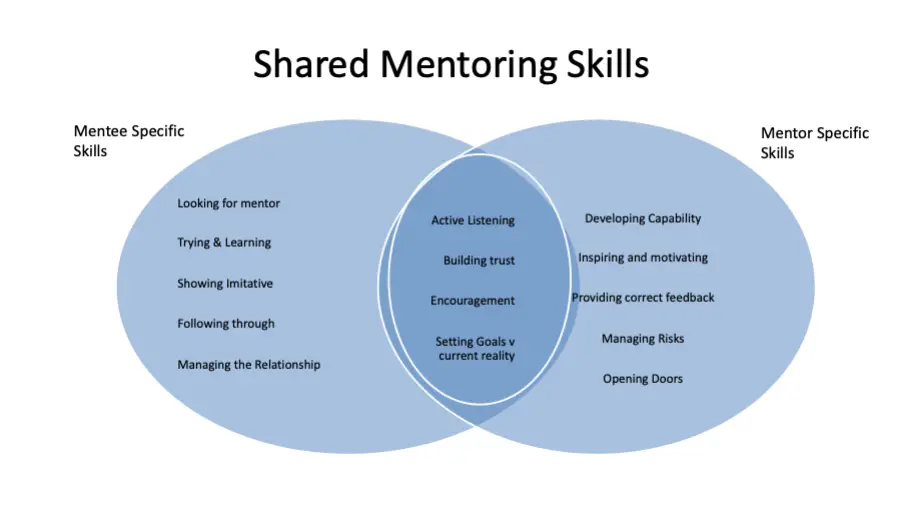
ABC Key Mentoring skills
There are many ways to strengthen mentoring inside an organisation, but the starting point is always the same: a clear leadership commitment to learning and development. Great mentors are rarely created overnight. They are developed through experience, reflection and practice. Across different organisations and sectors, three behaviours consistently stand out as the foundation of effective mentoring: active listening, genuine interest in people and a relentless focus on creating value.
A Being an Active listener
Mentoring only works when people feel safe enough to be honest. No one is finished learning, regardless of title, tenure or track record. Mentees need space to acknowledge mistakes, uncertainty and blind spots without fear of judgement. Without that openness, mentoring becomes superficial.
Active listening is what creates that space. It signals respect, builds trust and helps mentors understand what is really happening beneath the surface. In practical terms, it means listening to understand rather than listening to respond. That shift is subtle, but it changes the quality of every mentoring conversation.
For leaders, modelling this matters. When senior people speak candidly about missteps and learning curves, they give others permission to do the same. That does not weaken authority; it strengthens credibility and makes leadership more human.
B. Be Genuinely Interested in your People
Strong mentoring starts with seeing people as more than job titles or outputs. When mentors take time to understand an individual’s ambitions, strengths, frustrations and context, the relationship becomes more useful and more credible.
That genuine interest helps leaders spot patterns that would otherwise be missed: where someone is ready for stretch, where confidence is holding them back, or where support is needed to navigate the organisation more effectively. In that sense, mentoring is not separate from leadership. It is one of the clearest expressions of it.
This is also where great questions matter. Good mentors do not dominate the conversation or rush to fix every issue. They listen carefully, challenge constructively and ask questions that help people think more clearly about the real issue in front of them.
For many leaders, that is the hardest discipline of all: resisting the urge to provide the answer. Yet self-discovery is precisely what makes mentoring effective. People grow more from insight they uncover than advice they merely receive.
C. Mentoring Must Create Visible Value
Mentoring cultures become sustainable when both mentors and mentees can see the value they create. That value may show up as stronger decision-making, faster readiness for broader roles, better collaboration or greater confidence in tackling unfamiliar challenges. Over time, those individual gains become organisational advantages.
That is why mentoring cannot sit in isolation. It needs to be backed by a wider learning culture where development is resourced, expected and valued. When organisations give people time to learn, reflect and improve, mentoring stops being aspirational language and starts becoming real practice.
That support can take many forms: structured development plans, protected learning time, targeted skills programmes and investment in mentor capability. The point is simple: if leaders want a mentoring culture, they must design for it rather than assume it will happen on its own.
The ABCs of mentoring are straightforward, but not simplistic: listen actively, invest genuinely in people and ensure the process creates real value. Organisations that do those three things well are not just developing better mentors. They are building stronger cultures.
How Leaders Embed Mentoring into Culture
If leaders want mentoring to shape culture, it must be connected to how people are developed day to day. Development planning gives mentoring a practical foundation: it clarifies priorities, identifies where support is needed most and helps both mentor and mentee measure progress against meaningful goals.
The bigger point is this: mentoring is not simply a people initiative. It is a leadership choice about the kind of organisation you want to build. Cultures that mentor well are often cultures that learn faster, retain capability more effectively and prepare future leaders more intentionally.
Developing a Mentoring Culture
As roles become more complex, the ability to think well, learn continuously and navigate ambiguity becomes increasingly important. Mentoring helps people build exactly those capabilities. That is why organisations that take mentoring seriously are often better equipped for change.In the end, mentoring culture is not about adding another programme. It is about creating an environment where people think better, grow faster and contribute more.
If you are looking to developing a mentoring culture then why not get in touch with Richard Gourlay is a founder member of MentorsME a UK Finance initiative , and if you would like to discuss mentoring then just complete the form below lets start the conversation.
No responses yet